
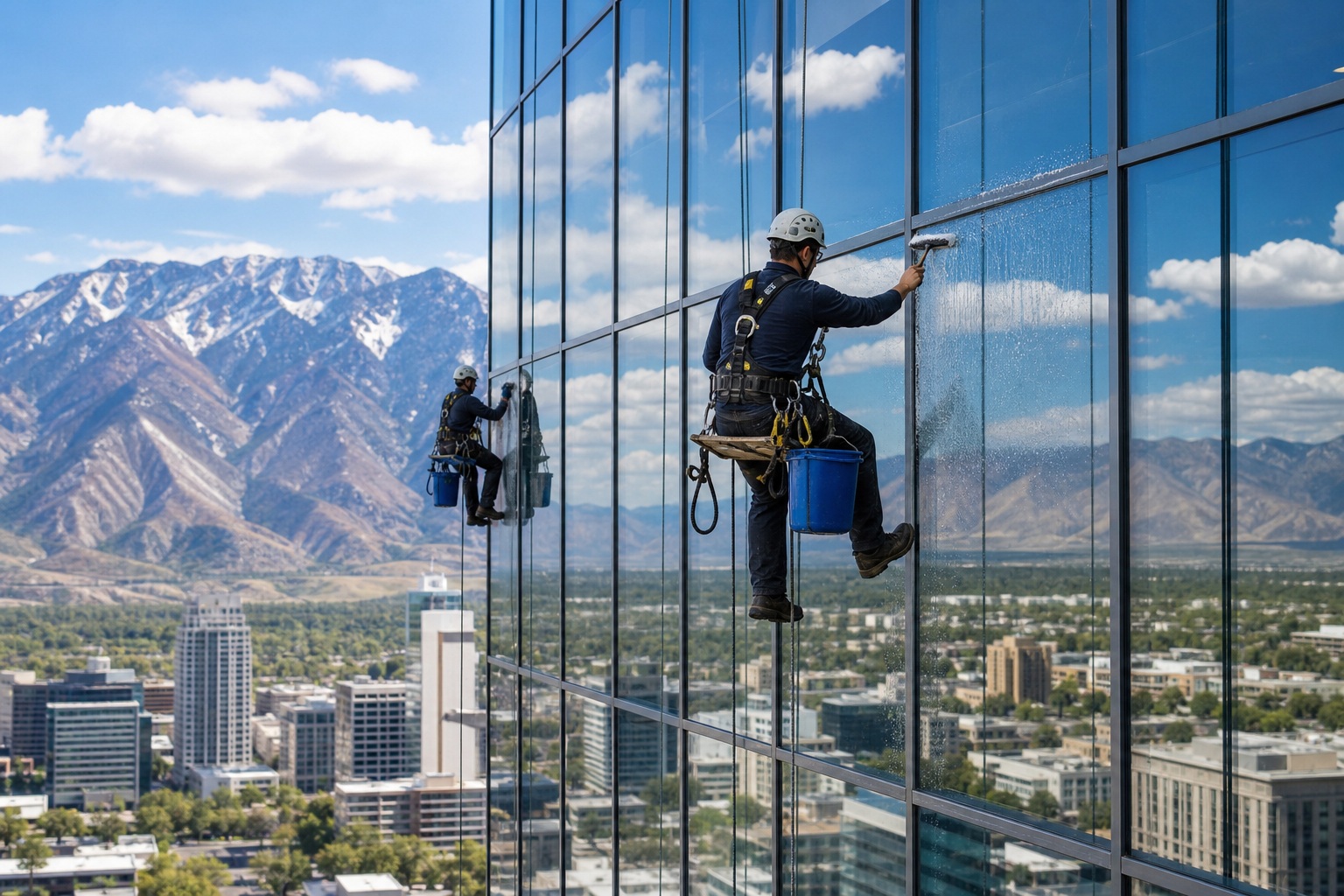
High-rise glass changes how a property is perceived. Smudges, mineral spots, dust, and weather buildup are more noticeable on towers and upper-level façades, especially in Utah’s dry, windy, and seasonally dusty conditions. For property managers and commercial owners, utah highrise window cleaning is less about a one-time polish and more about a recurring exterior maintenance plan that protects appearance, tenant satisfaction, and curb appeal.
Rolling Suds of Salt Lake – Park City works with commercial properties across Salt Lake City, Park City, and surrounding Utah communities. If your building has elevated glass, difficult access points, or a schedule that must stay consistent, the right vendor should be able to assess the façade, recommend the safest method, and provide a clear quote for ongoing service. Utah high rise window cleaning guide
What Utah High-Rise Window Cleaning Includes
High rise window washing Utah typically refers to specialized exterior glass cleaning for office towers, mixed-use buildings, multi-story commercial properties, and other tall structures that require advanced access planning. It can include exterior panes, glass railing systems, curtain wall sections, atrium glass, and other hard-to-reach surfaces.
This service is different from standard ground-level window cleaning. Crews must account for building height, anchor points, façade materials, weather, pedestrian traffic, and site logistics. For many properties, tall building glass cleaning is scheduled on a recurring basis so the building stays presentable through busy seasons and weather changes.
- Exterior glass panels on towers and mid-rise buildings
- Glass surfaces that require rope access, swing stage, or vertical access systems
- Commercial façades with recurring buildup from dust, traffic, and weather
- Common-area glass on multi-story commercial and residential properties
Access Methods for Tall Building Glass Cleaning
The best access method depends on the building’s design, height, and job scope. Vendors that offer multiple methods can adapt to the façade instead of forcing a one-size-fits-all approach.
Rope access exterior glass cleaning is often used when the building is tall, the work area is difficult to reach, or setup time needs to stay efficient. It can be a strong fit for irregular façades and locations where traditional lifts are not practical.
Swing stage window cleaning is common on larger façades that support suspended platforms. It can be useful for long vertical runs, repeat service, and buildings with broad glass sections.
Vertical access window service may refer to lift-based or other elevated access solutions for buildings where equipment staging is feasible. The right method depends on the property layout, surface conditions, and the amount of glass being cleaned.
- Rope access: best for complex or hard-to-reach areas
- Swing stage: best for larger, more uniform façade sections
- Vertical access: best when site conditions allow lift or equipment-based reach
For some projects, the answer is a combination of methods. A capable vendor should explain why one approach is safer, more efficient, or more cost-effective for your building.
Who Needs Commercial Window Cleaning for High Rises
Commercial window cleaning for high rises is typically purchased by property managers, facility teams, HOA boards, condo associations, and commercial owners who need the building to look consistent and well maintained. These customers are usually balancing appearance, budgets, access restrictions, and recurring service needs.
Common buyers include:
- Office tower management teams
- Mixed-use property managers
- HOA and condo communities with multi-story buildings
- Retail and hospitality properties with tall glass sections
- Facilities teams overseeing multiple buildings or campuses
If you manage a site with elevated glass and scheduled maintenance requirements, it helps to work with a company that understands vendor coordination, documentation, and recurring service planning. Related service information is available here: Commercial Window Cleaning Salt Lake City
Safety, Insurance, and Compliance for High-Rise Work
High-rise work should never be treated like routine ground-level window cleaning. Safety planning matters because technicians are working at height, around pedestrians, and often near other occupied areas. Buyers should ask how the contractor evaluates risk before work begins.
At a minimum, request proof of insurance, including a current certificate of insurance. Commercial clients should also ask about technician training, rescue planning, equipment inspection, and how the vendor aligns with OSHA expectations for working at height. If a company claims to provide fully insured high rise window cleaning, that should be easy to verify with documentation.
- Site-specific safety assessment
- Trained and qualified technicians
- Documented equipment checks
- Clear fall-protection and rescue procedures
- COIs and vendor paperwork before work starts
For property managers, the safest choice is often the vendor that can explain the plan clearly and provide the right paperwork before mobilizing.
Utah-Specific Maintenance Planning, Pricing Factors, and Service Areas
Utah buildings deal with dust, pollen, wind, winter residue, and frequent seasonal shifts. In places like Salt Lake City and Park City, glass can collect visible buildup quickly, especially on properties near traffic corridors or exposed to weather. That makes recurring Utah tall tower cleaning a practical maintenance decision rather than an occasional luxury.
Pricing for high rise window washing Utah is usually custom because several variables affect the scope:
- Building height and total glass area
- Façade complexity and access requirements
- Site conditions, parking, and staging space
- Frequency of service
- Safety and compliance requirements
Most properties benefit from seasonal, quarterly, or custom recurring service plans. The right schedule depends on exposure, tenant expectations, and how polished the property needs to look year-round. If you manage a building in Utah, a recurring plan can make budgeting easier and reduce heavy buildup between visits.
FAQ: High-Rise Window Cleaning in Utah
What is high rise window cleaning in Utah?
It is specialized exterior glass cleaning for tall buildings, towers, offices, and other multi-story commercial properties using methods such as rope access, swing stage, or vertical access systems.
How much does high rise window washing cost in Utah?
Pricing usually depends on building height, façade complexity, access method, site conditions, frequency, and safety or compliance requirements, so estimates are typically custom.
Do you offer rope access window cleaning for tall buildings?
This service page should position rope access as a core access option for tall, hard-to-reach façades when the building layout and job scope call for it.
Is your high rise window cleaning service fully insured?
Commercial buyers should expect proof of insurance, including COIs and vendor documentation, before work begins on high-rise or tower properties.
What buildings qualify as high rise or tall building glass cleaning?
Office towers, multi-story commercial buildings, HOAs, and other elevated façades that require specialized access and safety planning qualify.
How often should a high-rise building get its windows cleaned?
Most properties benefit from recurring maintenance based on exposure, weather, traffic, and appearance standards, often on a seasonal, quarterly, or custom schedule.
What access methods do you use for exterior glass cleaning?
Common methods include rope access exterior glass cleaning, vertical access window service, and swing stage window cleaning depending on the building and project.
How do you keep high rise window cleaning safe?
Safety comes from site assessment, trained technicians, proper equipment, compliance procedures, and documented risk controls for every project.
If you need a vendor-ready partner for a tower, office building, HOA, or mixed-use property, Rolling Suds of Salt Lake – Park City can help you plan the right service schedule and access method.