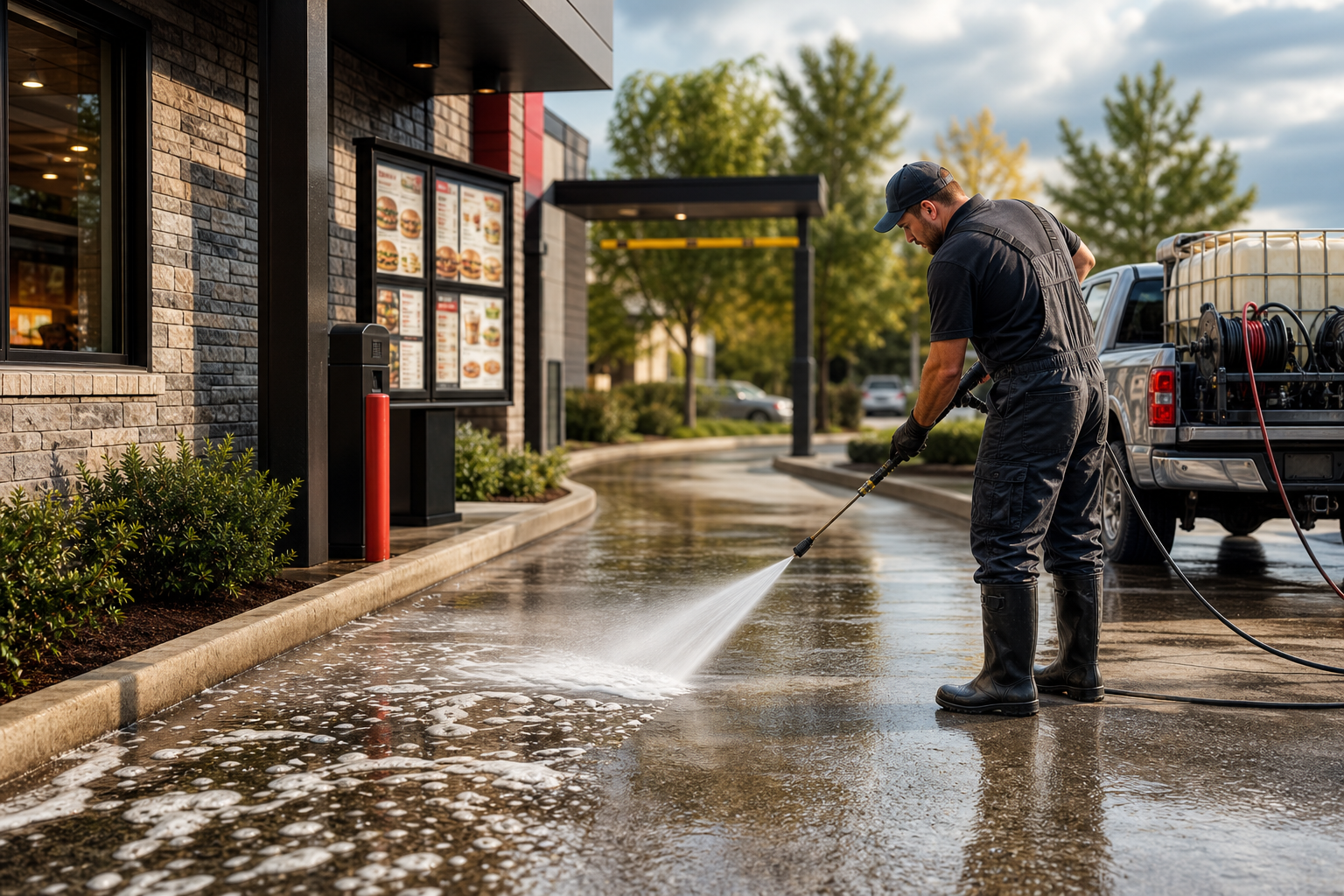
Drive-thru pressure washing is a specialized exterior cleaning service for restaurants, cafés, and fast-food lanes that take constant vehicle traffic, food spills, grease, oil, and weather-driven buildup. For operators, the goal is straightforward: keep the lane cleaner, safer, and more presentable without interrupting business.
At Rolling Suds of Salt Lake – Park City, we match the cleaning method to the surface and stain level. That may mean pressure washing, surface degreasing, or both. The payoff is a better-looking property and a cleaner customer experience from the order board to the pickup window.
What Is Drive-Thru Pressure Washing?
Drive-thru pressure washing is the cleaning of concrete lanes, curbs, sidewalk edges, and nearby customer-access surfaces in areas where vehicles idle, stop, and move through a restaurant’s service path. It is different from a quick rinse because these zones often collect grease, tire marks, drink spills, and dark discoloration that usually need commercial-grade equipment and a plan for runoff control.
It is a smart fit for fast food drive-thru washing, restaurant drive-thru cleaning, and any business that wants a cleaner first impression. It is especially useful for locations with visible traffic lanes, heavy lunch and dinner rushes, or recurring buildup that regular janitorial work cannot touch.
Common Drive-Thru Problems: Grease, Grime, Oil Stains, and Discoloration
Restaurant lanes collect more than dirt. Over time, drive-thru lane degreasing may be needed for grease splatter, oil drips, automotive residue, gum, food debris, and darkened traffic paths. These stains can make the property look older and less cared for, even when the kitchen and dining room are spotless.
Grease stain removal matters for more than appearance. Heavy buildup can create slick spots, especially around turns, order windows, and curb edges. In many cases, surface degreasing is the first step before full drive-thru concrete cleaning begins, because it helps loosen embedded residue that pressure alone may not lift.
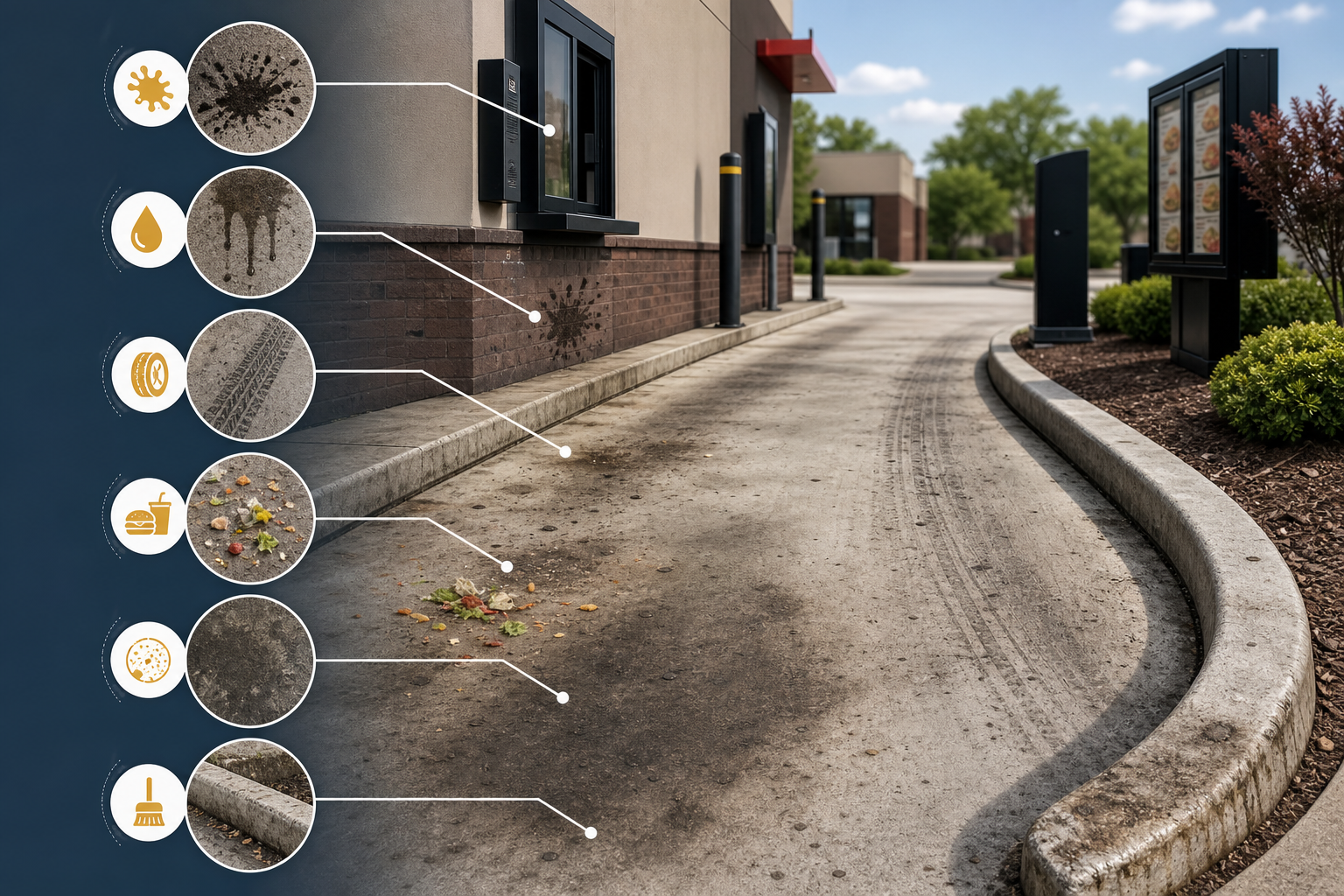
- Grease and oil marks near pickup windows
- Black tire tracks and rubber transfer
- Food and drink spills
- Discoloration along curb lines and stop points
- Weather-related grime and tracked-in debris
Pressure Washing vs. Degreasing: Which Method Do You Need?
The right method depends on the stain type and the surface condition. Pressure washing is ideal for removing loose dirt, surface grime, and general discoloration from concrete. Degreasing is better when you are dealing with oil stain cleaning, sticky residue, or buildup that has bonded to the surface over time.
In many cases, the best answer is both. Concrete degreasing breaks down the residue, then pressure washing clears the area and restores the surface appearance. If the concrete is in decent shape and the problem is mostly film or dirt, pressure washing alone may be enough. If the lane has years of grease exposure, a combined approach usually delivers better results.
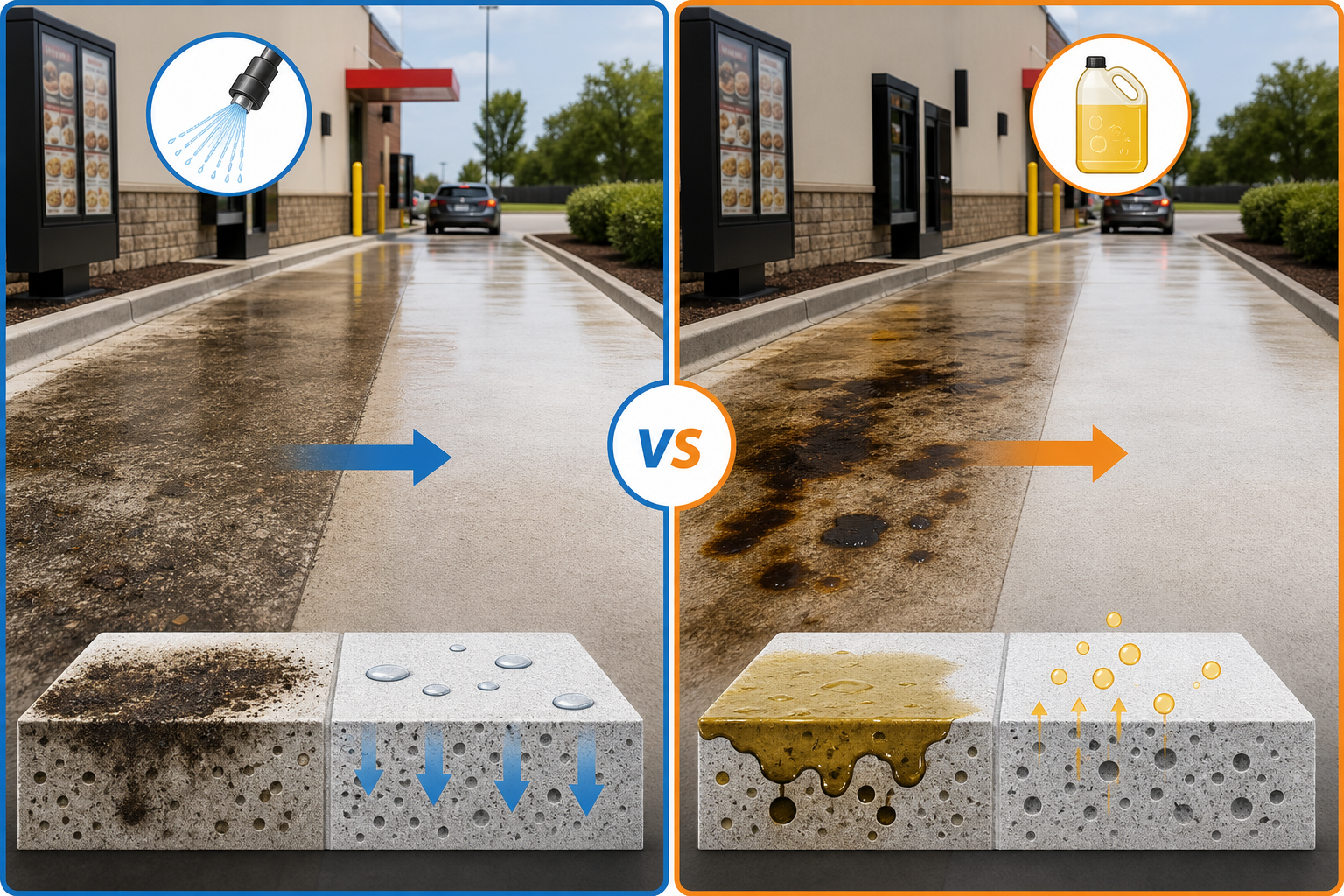
- Choose degreasing for oil, grease, and heavy food residue.
- Choose pressure washing for dirt, traffic grime, and broad cleaning.
- Choose both for heavily used restaurant drive-thru lanes.
How We Clean Drive-Thru Lanes Without Disrupting Business
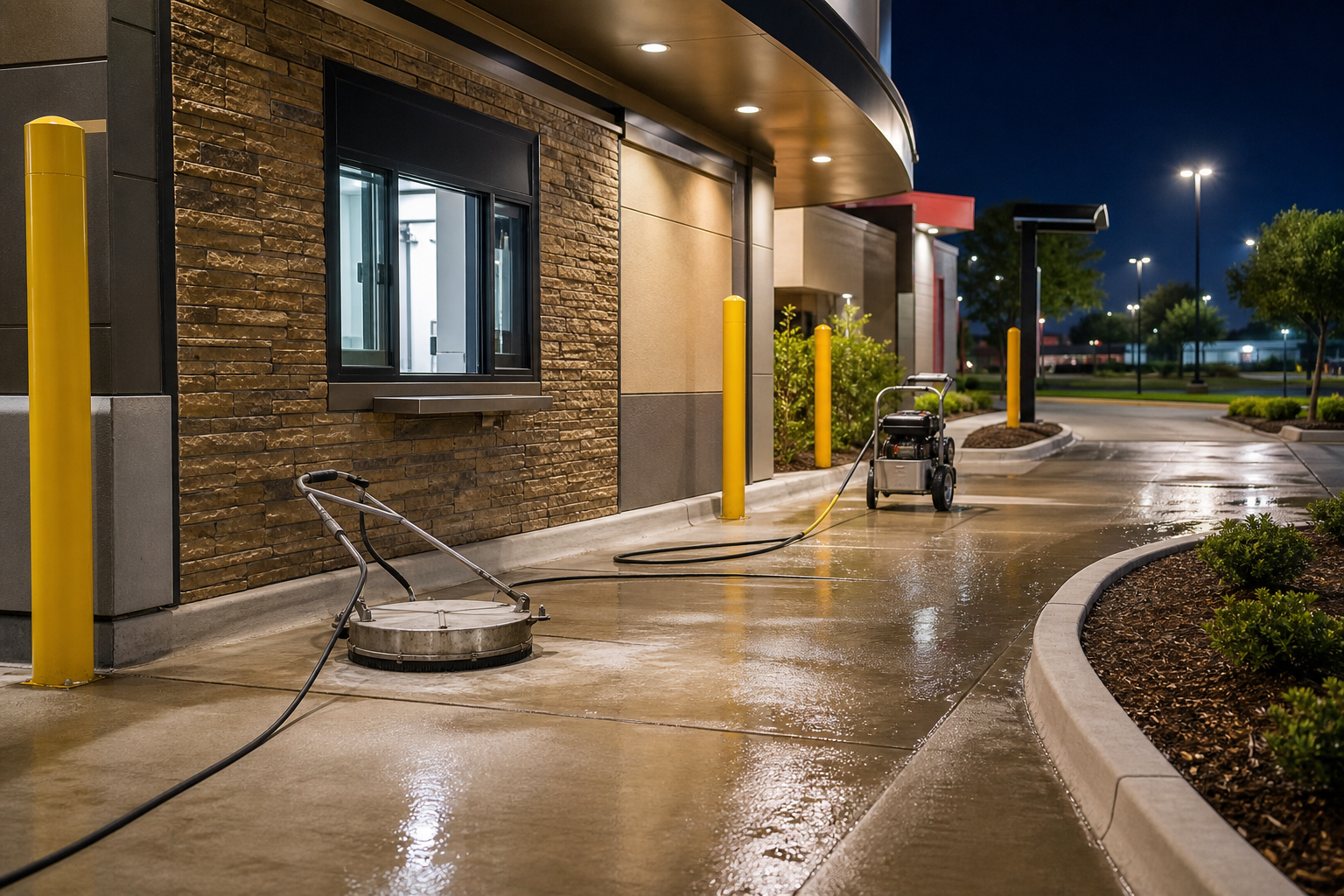
Commercial drive-thru cleaning works best when it is scheduled around your operating hours. For most restaurants, that means after-hours, early morning, or another window that avoids customer traffic. We plan the work so staff can keep the location open and productive while the exterior is being cleaned.
Our process may include barricading, traffic control, and a clear work zone to protect vehicles, employees, and guests. We also focus on customer-flow protection so the cleaning crew can finish without creating confusion at the menu board, lane entry, or pickup area. That practical approach is what restaurant drive-thru cleaning should be: strong results with minimal downtime.
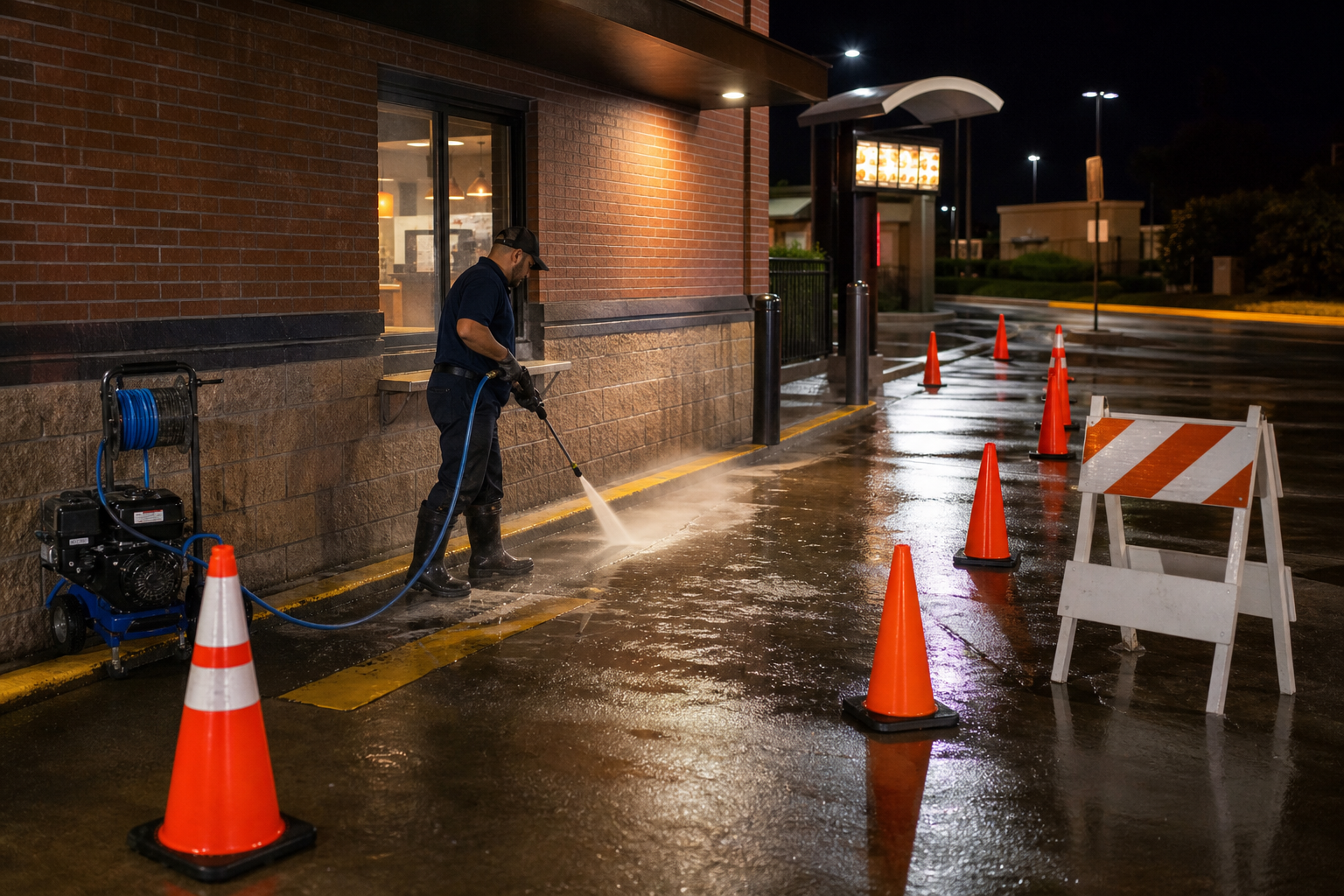
Commercial pressure washing for Salt Lake City businesses also helps restaurants coordinate larger exterior maintenance plans.
What Areas Are Included in Restaurant Drive-Thru Cleaning?
Drive-thru service is usually more than just the lane itself. A complete scope often includes nearby concrete and customer-facing surfaces that affect how the property looks and functions. That may include sidewalks, entry pads, curb lines, and adjacent concrete that shows tracked-in grime.
- Drive-thru lanes and waiting areas
- Sidewalk cleaning near entrances and pickup zones
- Entryway cleaning for customer-facing access points
- Curb lines, aprons, and concrete corners
- Parking lot cleaning around the immediate service area
Commercial concrete washing is most effective when the surrounding surfaces are cleaned together. That creates a more consistent appearance and helps the restaurant present one clean, cohesive front-of-house experience.
Surface Safety, Compatibility, and Runoff Considerations
Not every material should be treated the same way. Concrete pressure washing is typically appropriate for drive-thru lanes, but nearby painted surfaces, sealants, landscaping, and delicate materials may require a lower-pressure or surface-specific approach. A professional crew should always evaluate the area before cleaning begins.
Runoff control also matters. Detergent selection, rinse direction, and water management should be planned to protect landscaping, drains, and surrounding property. For restaurant drive-thru cleaning, the goal is a safe clean that improves appearance without creating new problems for the site.
How Often Should a Drive-Thru Be Cleaned?
The right schedule depends on traffic volume, grease exposure, and the kind of restaurant you operate. High-volume fast food locations may need recurring commercial drive-thru cleaning monthly or quarterly. Lower-traffic sites may only need seasonal service or targeted cleanup before busy periods, inspections, or special events.
As a general rule, if the lane looks dull, sticky, or visibly stained, it is probably ready for cleaning. Restaurants that want a consistently polished appearance often benefit from a recurring maintenance plan so buildup does not get out of hand between deep cleanings.
What Affects the Cost of Drive-Thru Pressure Washing?
Pricing for drive-thru pressure washing depends on a few key factors. Square footage, stain severity, access, timing, and whether the work includes degreasing all affect the final quote. A larger property with heavy grease removal needs more labor and materials than a small lane with light surface grime.
- Size of the drive-thru and surrounding concrete
- Severity of grease and oil buildup
- Need for degreasing or specialty treatment
- After-hours scheduling or access limitations
- Recurring service versus one-time cleaning
For restaurants, recurring service usually makes more sense than waiting for buildup to become severe. It keeps the property looking better and can reduce the labor needed for each visit.
FAQ: Drive-Thru Pressure Washing and Restaurant Cleaning
What is drive-thru pressure washing?
It is the professional cleaning of restaurant drive-thru lanes and nearby concrete surfaces to remove dirt, grease, and traffic buildup.
How often should a restaurant drive-thru be cleaned?
Many busy locations benefit from monthly or quarterly service, while lighter-use sites may only need seasonal cleaning.
Can pressure washing remove grease from drive-thru lanes?
Yes, but heavy grease removal usually works best when pressure washing is paired with surface degreasing.
Is drive-thru concrete cleaning safe for all surfaces?
Not automatically. The right pressure, detergent, and method depend on the surface condition and nearby materials.
What’s the difference between pressure washing and degreasing?
Pressure washing removes dirt and surface grime. Degreasing breaks down oil and grease that are bonded to concrete.
How do you clean a fast food drive-thru without disrupting business?
By scheduling after hours or during low-traffic windows and using a controlled work zone with barricades and traffic management.
Can you remove oil stains and grease buildup from concrete?
Often, yes. The outcome depends on stain age, surface condition, and whether the concrete has been previously treated.
Do you offer recurring drive-thru cleaning for restaurants?
Yes. Recurring service is a strong option for high-traffic restaurants that want to stay ahead of buildup.
How much does commercial drive-thru cleaning cost?
It depends on size, buildup, access, timing, and whether degreasing is included. A site-specific quote is the best way to price it accurately.
What areas are included in restaurant drive-thru cleaning?
Typically the lane, sidewalks, curb lines, entry areas, and nearby concrete surfaces that affect the look of the property.
If your restaurant needs drive-thru concrete cleaning, grease stain removal, or a recurring maintenance plan, Rolling Suds of Salt Lake – Park City can help. Request a quote and keep your customer lane cleaner, safer, and more professional year-round.