
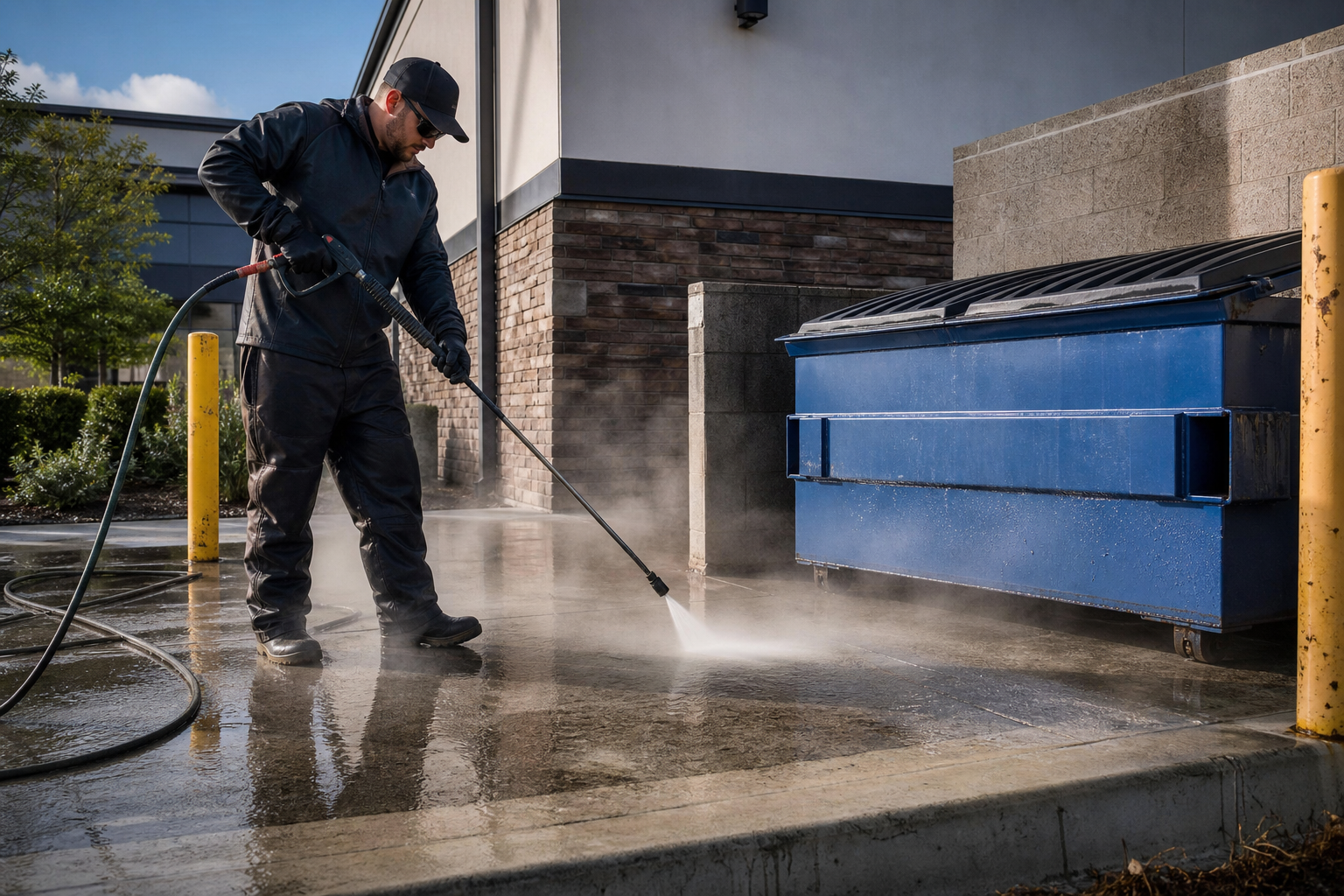
Hot water pressure washing is one of the most effective ways to remove grease, oil, grime, and built-up dirt from durable outdoor surfaces. For property managers, business owners, and facility teams, the appeal is straightforward: heat helps loosen stubborn soil faster, so cleaning often takes fewer passes and less scrubbing.
If you are comparing options for a storefront, dumpster pad, driveway, or parking area, this guide explains when hot water power washing is worth it, where it performs best, and when a different method is the better fit. For related cleaning topics, see our commercial pressure washing services guide and our post on how to remove grease from concrete.
What Hot Water Pressure Washing Is Used For
Hot water exterior cleaning uses heated water to break down oils, grease, gum, sludge, and other heavy buildup on hard surfaces. The added heat improves the cleaning process because it softens contaminants before pressure and detergent do the rest. That makes commercial hot water washing especially useful when a site has food waste, vehicle fluids, or frequent foot traffic.
- Grease and oil on concrete
- Dumpster pad cleaning
- Drive-thru lanes and restaurant work areas
- Parking lot cleaning where stains are embedded
- Storefront approaches and high-traffic hardscapes
For businesses, the goal is not just appearance. Faster soil breakdown can also support safer walking surfaces and a cleaner customer experience.
Hot Water vs. Cold Water: When Heat Is Worth It
Cold water pressure washing can handle loose dirt, dust, pollen, and routine surface grime. Hot water pressure washing becomes the better choice when the soil is sticky, oily, or strongly bonded to the surface. In those cases, heat often reduces the amount of chemical needed and improves the final result.
- Use cold water for light rinsing, general dust, and simple maintenance washing.
- Use hot water for grease buildup cleaning, oil stain removal, and heavy commercial soils.
- Choose heat first when the surface has food oils, automotive residue, or repeated spills.
A practical rule of thumb: if the stain is oily, tacky, or keeps returning in the same spot, heat is usually worth the upgrade.
Best Uses by Surface and Stain Type
Hot water concrete cleaning is most effective on durable hard surfaces that can handle pressure and temperature together. It is often used on driveways, sidewalks, loading zones, dumpster pads, and other areas where grime becomes embedded over time.
- Concrete: excellent for oil spots, tire marks, and grease buildup cleaning
- Driveways: effective for driveway hot water cleaning after vehicle leaks or heavy use
- Dumpster pads: one of the best uses for hot water grease removal
- Parking lots: useful for drips, spills, and traffic film
- Storefront walks: helps restore curb appeal in customer-facing areas
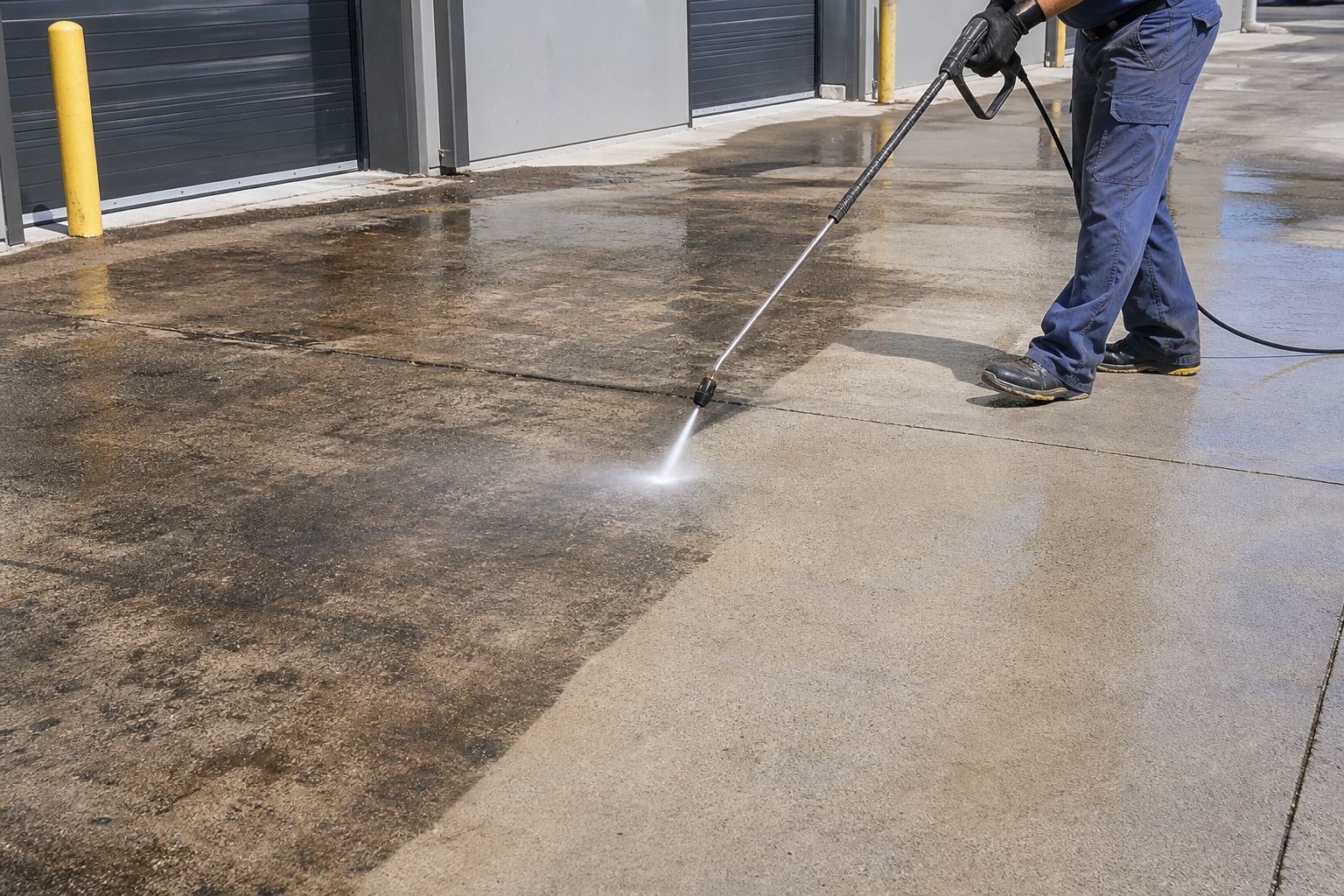
Before-and-after results are often strongest on stains that are fresh enough to break down, but older buildup can still improve with the right combination of heat, detergent, dwell time, and surface cleaning with hot water.
Commercial Exterior Cleaning Applications and Maintenance Frequency
Restaurants, retail centers, warehouses, apartments, and multi-location properties all use commercial pressure washing to keep exterior spaces clean and presentable. Hot water is especially useful anywhere grease or organic residue collects regularly.
- Restaurants: dumpster pads, rear service areas, loading zones, and drive-thrus
- Retail centers: sidewalks, entries, and high-traffic common areas
- Warehouses: docks, concrete aprons, and equipment access areas
- Apartments: trash corrals, breezeways, and shared concrete surfaces
- Multi-site portfolios: recurring building washing and scheduled cleanup
Frequency depends on traffic and soil load. High-use food service properties may need monthly or quarterly service, while many retail and warehouse sites can stay on a semiannual or annual plan. Consistent commercial exterior cleaning helps prevent buildup from turning into a bigger restoration project later.
Safety, Surface Compatibility, and Limits
Hot water pressure washing is powerful, but it is not ideal for every surface. Concrete and other durable hardscapes usually tolerate it well when the equipment is set correctly. Delicate materials may need lower pressure, lower temperature, or a soft washing approach instead.
- Safer for: concrete, masonry, and other hard commercial surfaces
- Use caution on: siding, painted surfaces, older brick, and weathered materials
- Better alternative for delicate areas: soft washing with controlled solutions and low pressure
Professional setup matters. Temperature, PSI, detergent choice, dwell time, and surface prep all affect the result. Too much heat or pressure can damage finishes, while the right balance protects the surface and improves cleaning efficiency.
Pricing Factors for Hot Water Exterior Cleaning
Pricing for hot water pressure washing depends on several practical factors. Square footage is one part of the estimate, but not the only one. Soil load, stain severity, access, and whether the site has an easy water source all affect the final price.
- Size of the area being cleaned
- Amount of grease, oil, or embedded grime
- Access to the work area and equipment setup time
- Hot water demand and temperature requirements
- Specialty stain removal or degreasing needs
- Recurring maintenance schedules versus one-time service
For commercial hot water washing, recurring plans are often more efficient than waiting until the surface becomes heavily soiled. That can save time on each visit and help keep curb appeal consistent.
FAQ: Hot Water Pressure Washing Questions Buyers Ask
What is hot water pressure washing used for? It is used to break down grease, oil, grime, and heavy buildup on durable surfaces like concrete, sidewalks, dumpster pads, drive-thrus, and commercial exteriors.
Is hot water better than cold water for pressure washing? Hot water is better when the project involves grease, oil, or sticky buildup. Cold water can still work for lighter dirt and routine washing.
What surfaces can be cleaned with hot water pressure washing? Common surfaces include concrete, parking lots, driveways, storefront approaches, dumpster pads, and other durable exterior hardscapes.
Can hot water pressure washing remove grease and oil stains? Yes, it is one of the best options for grease buildup and many oil-based stains, especially on concrete and other hard surfaces.
Is hot water pressure washing safe for concrete, siding, and brick? It is generally safe for concrete when applied correctly. Siding and brick may require lower pressure, careful temperature control, or soft washing depending on the material and condition.
When should a business use commercial hot water washing? Use it for grease-heavy areas, food service properties, dumpster pads, drive-thrus, parking lots, and any site where curb appeal and cleanliness affect customers or compliance.
How much does hot water pressure washing cost? Pricing depends on square footage, soil level, access, water availability, and whether specialty stain removal or recurring maintenance is needed.
What is the difference between hot water pressure washing and soft washing? Hot water pressure washing uses heat and pressure on durable surfaces, while soft washing uses lower pressure and targeted solutions for delicate materials like siding and some painted surfaces.
If you manage a property where grease, oil, or heavy buildup keeps coming back, hot water exterior cleaning is often the most practical way to stay ahead of the mess.