
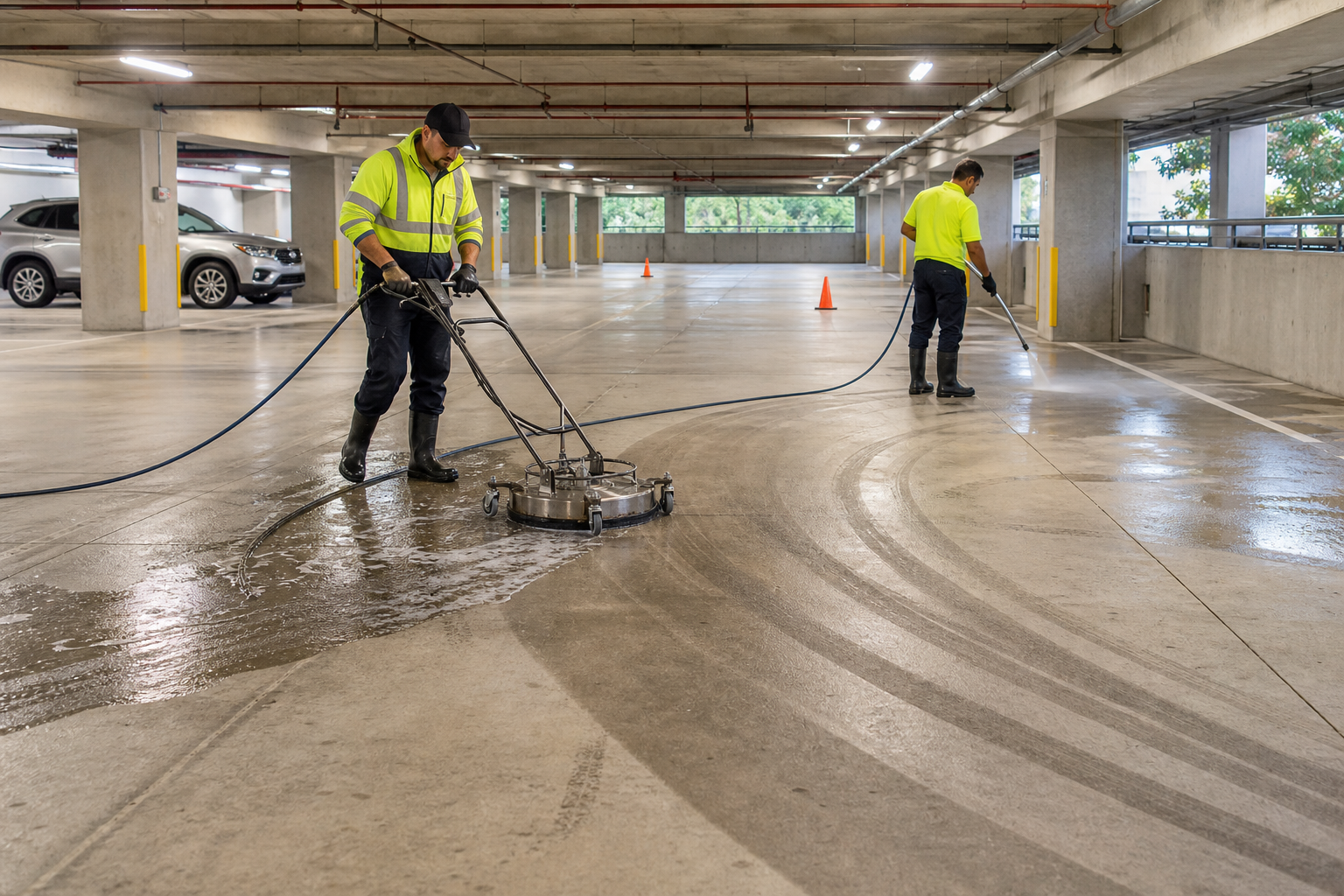
Parking garage tire marks can make a property look neglected fast, especially near entrances, turns, and busy parking lanes. Facility managers usually want more than a quick cosmetic fix: they want the scuffs, rubber residue, and mixed staining removed safely without harming the slab or creating a slip hazard.
[IMAGE]
Why Parking Garage Tire Marks Happen and What They Mean
Tire marks usually show up when rubber transfers to concrete from hard braking, tight turning, hot tires, or repeated traffic in the same path. In parking structures, those marks often build up where vehicles slow down, pivot, or sit in one place. On some floors, the marks are mostly cosmetic. On others, they are mixed with oil, grease, salt, or general grime and become much harder to remove.
That is why parking garage stain removal starts with identifying what you are actually seeing. Fresh scuffs are often surface-level. Older stains may be embedded in porous concrete or sealed floors with worn traffic patterns.
Quick Answer: The Best Method for Tire Scuff and Stain Removal
The best way to clean parking garage tire marks is to assess the surface first, pretreat stubborn areas, and then use controlled concrete cleaning with the right pressure and chemistry. In many cases, the right answer is a combination of spot treatment, garage floor cleaning, and parking structure washing rather than brute force alone.
- Inspect the concrete for sealer, cracking, and surface wear.
- Use a degreaser or pre-treatment where rubber is mixed with oil or grease.
- Agitate the stain when needed before washing.
- Use controlled pressure and surface equipment to clean evenly.
For larger or heavily trafficked garages, a professional tire scuff removal service is usually faster, safer, and more consistent than DIY cleanup.
Tire Marks vs. Oil, Grease, and General Concrete Staining
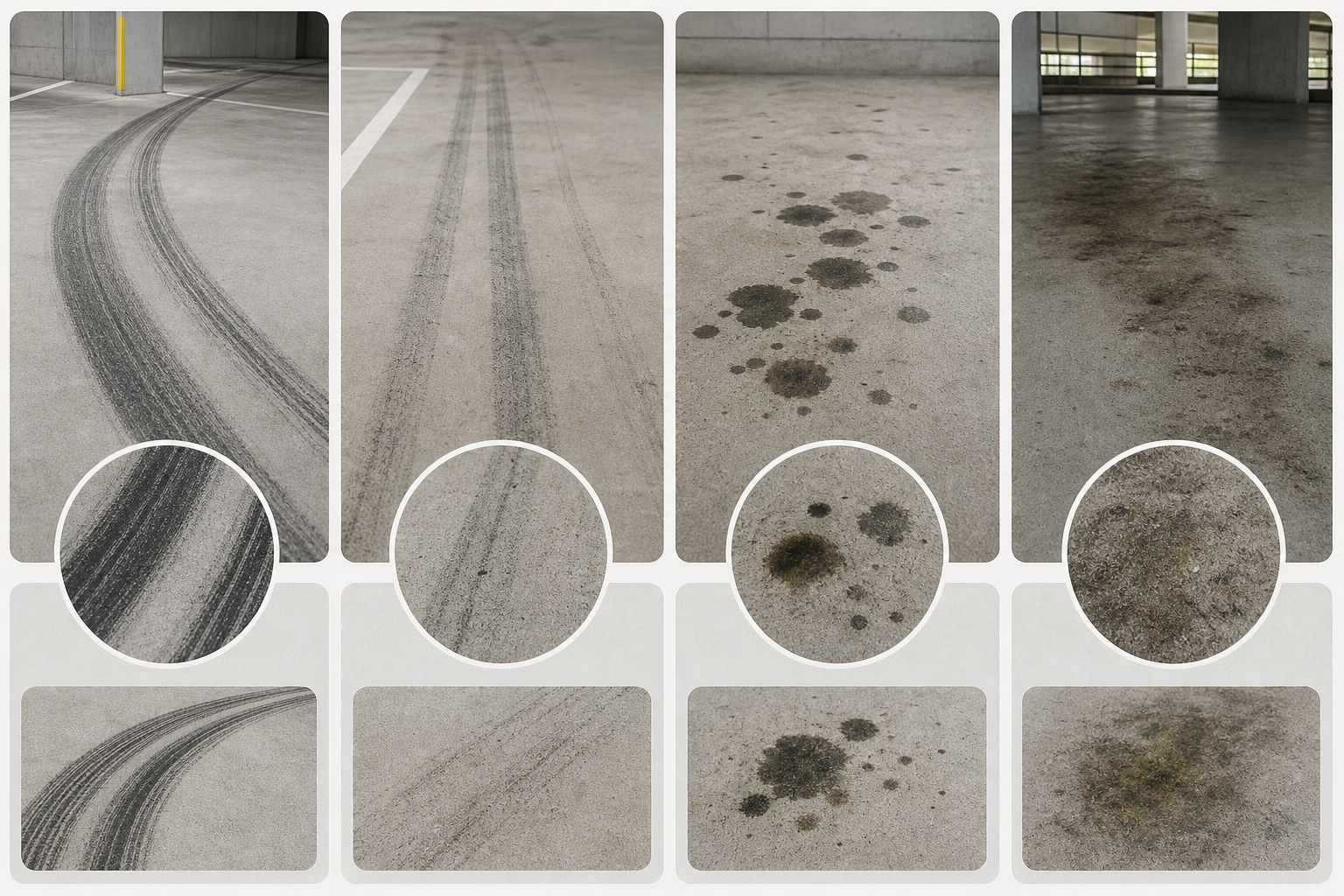
Not every dark mark in a garage is a tire mark. Some are rubber transfer. Some are oil spots. Others are grease buildup, tracked-in grime, or old staining that has been worked into the concrete over time. Matching the cleaning method to the stain type matters.
- Fresh tire scuffs: Often respond well to light pretreatment and washing.
- Old tire marks: May need repeated treatment and stronger agitation.
- Oil spots: Usually require commercial garage degreasing before washing.
- Grease buildup: Needs chemistry and dwell time, not just water pressure.
- General staining: May improve with thorough garage floor cleaning even if it does not disappear completely.
Choosing the Right Cleaning Method for Parking Structure Concrete
The safest method depends on the surface and the soil level. Pressure washing concrete can be effective, but the pressure has to be matched to the condition of the slab. Soft washing for concrete may help with lighter contamination and chemical pretreatment, while a surface cleaner for concrete gives a more even result on large flat areas.
Simple decision tree:
- Light scuffs on sound concrete: Pretreat and wash with moderate pressure.
- Mixed staining or traffic lanes: Use degreaser, agitation, and a surface cleaner.
- Worn, sealed, or aging surfaces: Start conservatively to avoid damage.
- Heavy buildup: Plan for multiple passes and a longer dwell time.
Degreasers, Chemicals, and Safety for Garage Floor Cleaning
Garage floor degreaser products are often essential when tire marks are paired with oil, grease, or roadway residue. The goal is to loosen the contamination so the wash step can remove it more effectively. Chemical selection matters, especially in enclosed parking structures where ventilation, runoff, and foot traffic are concerns.
Professional commercial garage degreasing typically includes pre-treatment, measured dwell time, and careful rinsing. It is important to avoid incompatible products, over-concentrated mixes, or chemicals that can stain, etch, or leave the floor slick.
Step-by-Step Process for Parking Garage Stain Removal
A professional process usually follows a predictable workflow:
- Inspect the slab, stain type, drainage, and traffic patterns.
- Set traffic control and post wet-floor warnings.
- Apply pretreatment to tire marks and greasy areas.
- Agitate stubborn spots with appropriate tools.
- Wash with controlled pressure and a surface cleaner where appropriate.
- Recover or manage runoff according to site requirements.
- Rinse, inspect, and spot-treat remaining marks.
This workflow is what makes parking garage stain removal more effective than random spot cleaning.
Runoff Control, Compliance, and Slip-and-Fall Safety
Parking structure washing must be done with wastewater control in mind. Depending on the site, runoff may need to be contained or recovered. Even when the cleaning is straightforward, wet concrete creates temporary slip risk. That is why signage, lane closures, and drying time matter just as much as the wash itself.
For occupied garages, a professional crew helps reduce risk by working in phases, coordinating access, and keeping pedestrian paths protected.
How Surface Type, Sealers, and Porosity Affect Results
Concrete does not all clean the same way. Unsealed concrete can absorb tire residue quickly. Porous or aged slabs often hold staining deeper in the surface. Sealed concrete may release marks more easily, but worn sealer can create uneven results. That is why concrete cleaning methods have to be adjusted to the deck or garage condition.
In some cases, the result is a major improvement rather than a perfect reset. Deeply embedded marks may need repeat treatment, especially in high-traffic lanes.
Before-and-After Expectations for Old vs. Fresh Tire Marks
Fresh marks are usually the easiest to improve. Moderate buildup often responds well to pretreatment and washing. Deep, aged, or heat-bonded tire marks may fade significantly but not disappear completely in a single service. The age of the stain, the porosity of the slab, and the amount of embedded soil all affect the final result.
For property teams, the value is often visible immediately: brighter concrete, cleaner traffic lanes, and a more professional appearance for tenants and guests.
How Often Parking Garages Should Be Cleaned
Parking structure cleaning should be scheduled based on traffic, exposure, and how quickly buildup returns. Open-air decks often need more frequent attention from weather and road residue. Enclosed garages may need recurring garage maintenance cleaning to manage tire marks, dust, and spills.
- High-traffic garages: Monthly or quarterly service may be appropriate.
- Moderate-use properties: Seasonal or semiannual cleaning can work.
- Heavy buildup areas: Spot treatments between full cleanings help.
When to Hire a Commercial Cleaning Company
Hire a professional when the garage needs lane closures, overnight scheduling, documented results, insured crews, or equipment that can handle large concrete areas efficiently. A tire scuff removal service is especially valuable when the property cannot afford downtime or inconsistent results.
Rolling Suds of Salt Lake – Park City supports commercial exterior cleaning needs across Salt Lake City, Park City, and surrounding Utah communities, including parking structure washing and commercial garage degreasing for managed properties.
Service Planning for Facility Managers and Property Teams
For facility managers, the best approach is to build garage floor cleaning into a maintenance plan instead of waiting for buildup to become obvious. Recurring service helps control appearance, reduce labor spikes, and keep surfaces safer and easier to manage over time. It also makes budgeting easier and helps preserve the look of the property.
If you want cleaner traffic lanes, better curb appeal, and a smarter long-term plan for parking garage stain removal, recurring maintenance is often the most efficient option.
Frequently Asked Questions
How do you clean tire marks off a parking garage floor?
The usual process is to inspect the surface, pretreat the marks, agitate if needed, and wash with the safest method for the concrete. If the stains are mixed with oil or grease, commercial garage degreasing may be needed first.
What is the best way to remove tire scuffs from concrete?
The best method depends on stain age, concrete type, and whether the mark is only on the surface or embedded in the slab. Surface marks often respond well to pretreatment and controlled pressure washing concrete.
Can pressure washing remove parking garage stains?
Yes, but pressure washing alone is not always enough. For best results, parking garage stain removal often includes degreasing, agitation, and surface cleaning equipment.
Is it safe to pressure wash a parking garage?
It can be, when the surface is in good condition and the crew manages water, slip hazards, and pressure levels correctly. Safety planning is critical in occupied garages.
Do you need degreasing for tire marks in a parking structure?
If the tire marks are mixed with oil, grease, or roadway residue, then yes, a garage floor degreaser can improve the outcome before washing.
How often should a parking garage be cleaned?
That depends on traffic and exposure. Many properties benefit from recurring parking structure cleaning on a monthly, quarterly, or seasonal schedule.
Need a cleaner, safer garage floor? Parking Garage Cleaning for Commercial Properties