
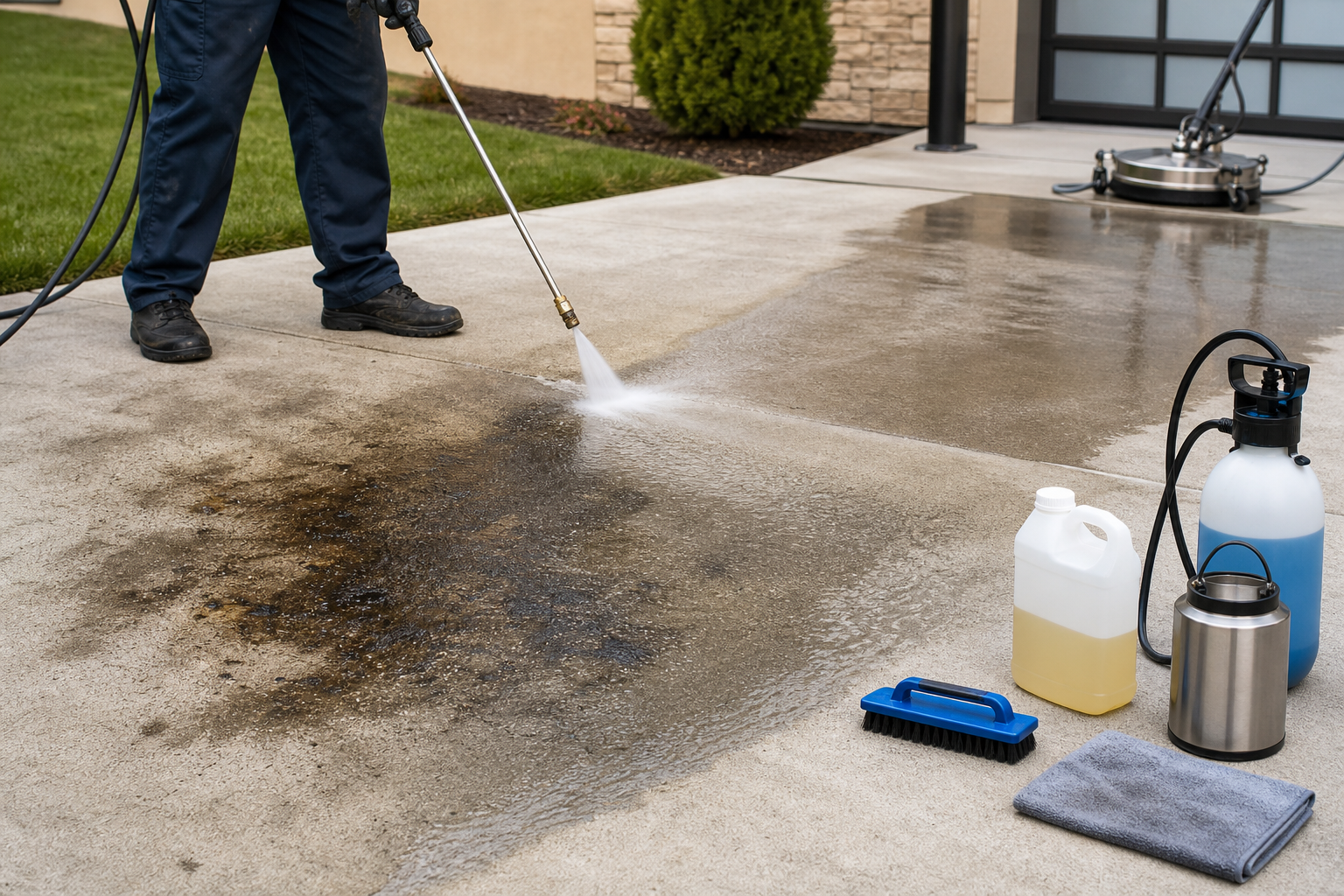
Grease on concrete is frustrating because it soaks into pores fast. The best way to remove grease from concrete depends on how old the stain is, how porous the surface is, and whether you are dealing with a small driveway spill or a large commercial grease problem. Fresh stains are usually easier to absorb and lift. Old stains often need pretreatment, hot water, and repeated degreasing. For stubborn or recurring buildup, a professional concrete degreasing service can save time and improve results.
In Salt Lake City and Park City, we see everything from sidewalk grease stain removal to dumpster pad grease cleaning and parking lot degreasing. If the area is important for curb appeal or safety, it is worth using the right method from the start.
Quick answer: the best way to remove grease from concrete
The fastest answer is this: absorb what you can, apply a concrete-safe degreaser, scrub with a stiff brush, rinse with hot water if available, and repeat as needed. That process works well for many fresh and moderate stains. For deep, old, or commercial-grade buildup, you may need pressure washing concrete with heat and stronger pretreatment.
- Fresh spill: absorb, pretreat, scrub, and rinse.
- Old stain: use a stronger oil stain pretreatment and repeat.
- Large area: consider professional hot water degreasing.
For properties that need a cleaner first impression, concrete cleaning in Park City can be a smart next step after DIY attempts stop working.
Understand the stain first: oil vs grease, fresh vs old, sealed vs porous concrete
Oil and grease are related, but they do not behave exactly the same. Oil is thinner and can travel farther into concrete. Grease is thicker, but it still bonds tightly to rough surfaces and can leave a dark shadow even after the surface looks clean. The age of the stain matters just as much.
Porous concrete absorbs contaminants quickly, especially on unfinished driveways, sidewalks, patios, and walkways. Sealed concrete is easier to clean, but once the sealer wears down, stains can settle in unevenly. A fresh stain on sealed concrete may wipe up well, while an old stain on porous concrete may only lighten.
- Fresh stains: easiest to remove completely.
- Old stains: may require repeated treatments.
- Porous concrete: absorbs grease deeper.
- Sealed concrete: cleaner results, but sealer condition matters.
Step-by-step DIY concrete grease removal process
If you want to know how to clean grease off concrete, start with the simplest method first. Do not flood the area immediately, because that can spread the stain and push grease farther into the slab. Work from dry cleanup to wet cleaning in stages.
- Blot or absorb excess grease with paper towels, rags, kitty litter, or an absorbent compound.
- Apply a concrete-safe degreaser or detergent for grease stains.
- Let it dwell according to the label.
- Scrub with a stiff nylon brush.
- Rinse with clean water.
- Repeat if the stain lightens but does not fully disappear.
Avoid using too much water too early. That can spread the stain and make the affected area larger. On driveways and sidewalks, work in sections so runoff does not carry residue across clean concrete.
Best cleaners, pretreatments, and tools for tough concrete stains
The right cleaner depends on the stain and the surface. For light spots, a basic degreasing detergent may be enough. For heavier concrete oil stain removal, pretreatment is often more important than pressure alone.
- Absorbents: kitty litter, baking soda, or commercial absorbent for fresh spills.
- Degreasers: concrete-safe cleaners designed for oil and grease.
- Brushes: stiff nylon brushes help agitate without damaging most concrete.
- Surface cleaner: useful for larger areas and more even cleaning.
- Hot water equipment: improves breakdown of greasy residue.
For stubborn oil stain pretreatment, read the product directions closely and test first if the concrete is colored, decorative, or sealed. A strong product is not always the best product if it risks etching or discoloration.
Pressure washing, hot water, and scrubbing: which method works best?
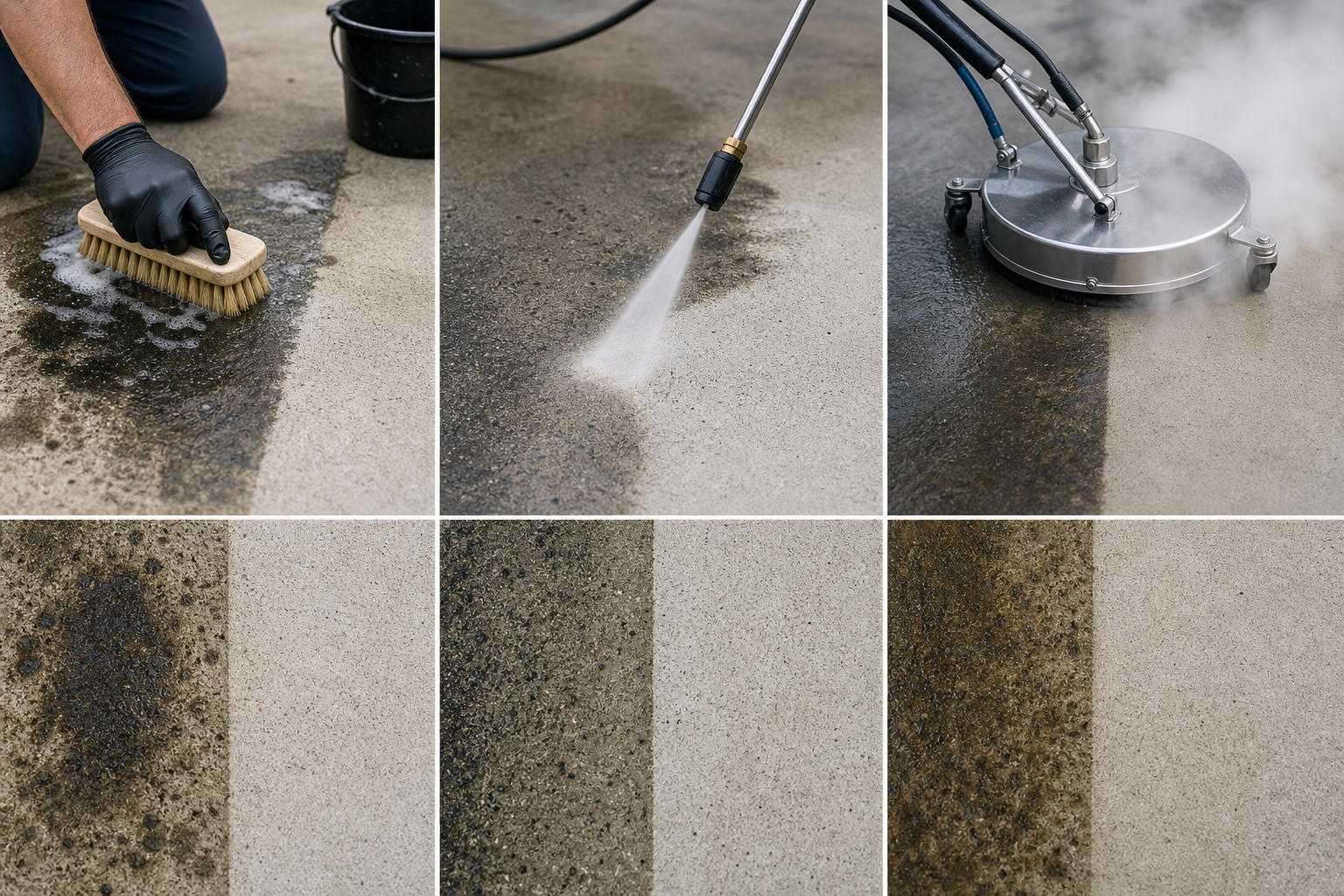
Scrubbing helps loosen the stain, but heat often makes the biggest difference. Standard pressure washing can remove surface residue and improve appearance, but it may not fully lift embedded grease. Hot water pressure washing adds thermal help, which breaks down oily material more effectively.
Here is the general rule:
- Scrubbing: best for pretreatment and small spots.
- Pressure washing concrete: good for rinsing and surface cleanup.
- Hot water degreasing: best for deep buildup and commercial areas.
Heat plus agitation is usually the strongest combination. That is why commercial concrete cleaning often relies on hot water systems instead of cold water alone.
How to clean grease off driveways, sidewalks, patios, and walkways
Different concrete surfaces need different expectations. Driveway grease stain removal is often more forgiving because driveways are built for vehicles and frequent washing. Sidewalk grease stain removal usually needs a lighter touch because the goal is to improve appearance without creating slip or runoff issues. Patios and walkways can be more visible, so even a light shadow may still matter.
- Driveways: use stronger pretreatment if needed, then rinse thoroughly.
- Sidewalks: control runoff and keep the surface safe for foot traffic.
- Patios: test cleaners first, especially near decorative finishes.
- Walkways: focus on even cleaning to avoid streaks.
Older stains may never vanish completely, but they can often be lightened enough to restore curb appeal.
Commercial grease removal for restaurants, dumpster pads, and parking lots
Commercial grease removal is a different job from a small driveway spill. Restaurants, dumpster pads, and parking lots often have recurring buildup from cooking waste, leaks, tracked residue, and daily traffic. These areas can become slippery and unattractive quickly, especially in customer-facing zones.
For food-service properties, the right service plan may include dumpster pad grease cleaning, sidewalk degreasing, and scheduled exterior maintenance. Recurring service helps reduce odor, stains, and safety concerns while keeping the property ready for customers and inspections.
- Restaurants and cafes
- Dumpster enclosures and pads
- Parking lots and drive lanes
- Service alleys and loading areas
If your property needs commercial-grade results, Old Town Park City commercial exterior maintenance can help match the cleaning method to the surface and soil level.
When to call a professional concrete degreasing service
DIY can work for small stains, but there are clear signs that professional degreasing service is the better option. Large areas, repeated stains, and deeply saturated concrete usually require stronger equipment and more controlled cleaning methods. Time-sensitive commercial properties may also need a vendor that can work fast without disrupting customers or tenants.
Call a professional if:
- The stain is old and deeply embedded.
- The affected area is large or recurring.
- You need commercial concrete cleaning before an event or inspection.
- You want hot water degreasing with better rinse control.
- You are dealing with multiple grease-prone zones.
Rolling Suds of Salt Lake – Park City works with homeowners, restaurants, property managers, and multi-location operators who need reliable exterior cleaning across Utah communities.
Cost factors for concrete grease removal and recurring maintenance
Concrete grease removal cost depends on more than square footage. Pricing is influenced by stain severity, access, water availability, surface condition, and whether hot water or specialty pretreatment is needed. Larger commercial jobs may also include recurring maintenance planning.
- Square footage and total affected area
- Fresh stain versus old buildup
- Hot water needs
- Site access and scheduling complexity
- Runoff control and cleanup requirements
- Recurring maintenance frequency
For commercial grease removal, a regular maintenance plan is often more cost-effective than waiting for buildup to become a bigger problem.
Prevention, compliance, and runoff considerations for grease-prone areas
Prevention matters most in grease-prone area cleaning. The best approach is to reduce buildup before it hardens into the concrete. That means routine cleaning, quick spill response, and scheduled service in high-traffic zones.
- Clean spills quickly before they soak in.
- Use absorbents for fresh leaks.
- Schedule recurring cleaning for restaurants and dumpster pads.
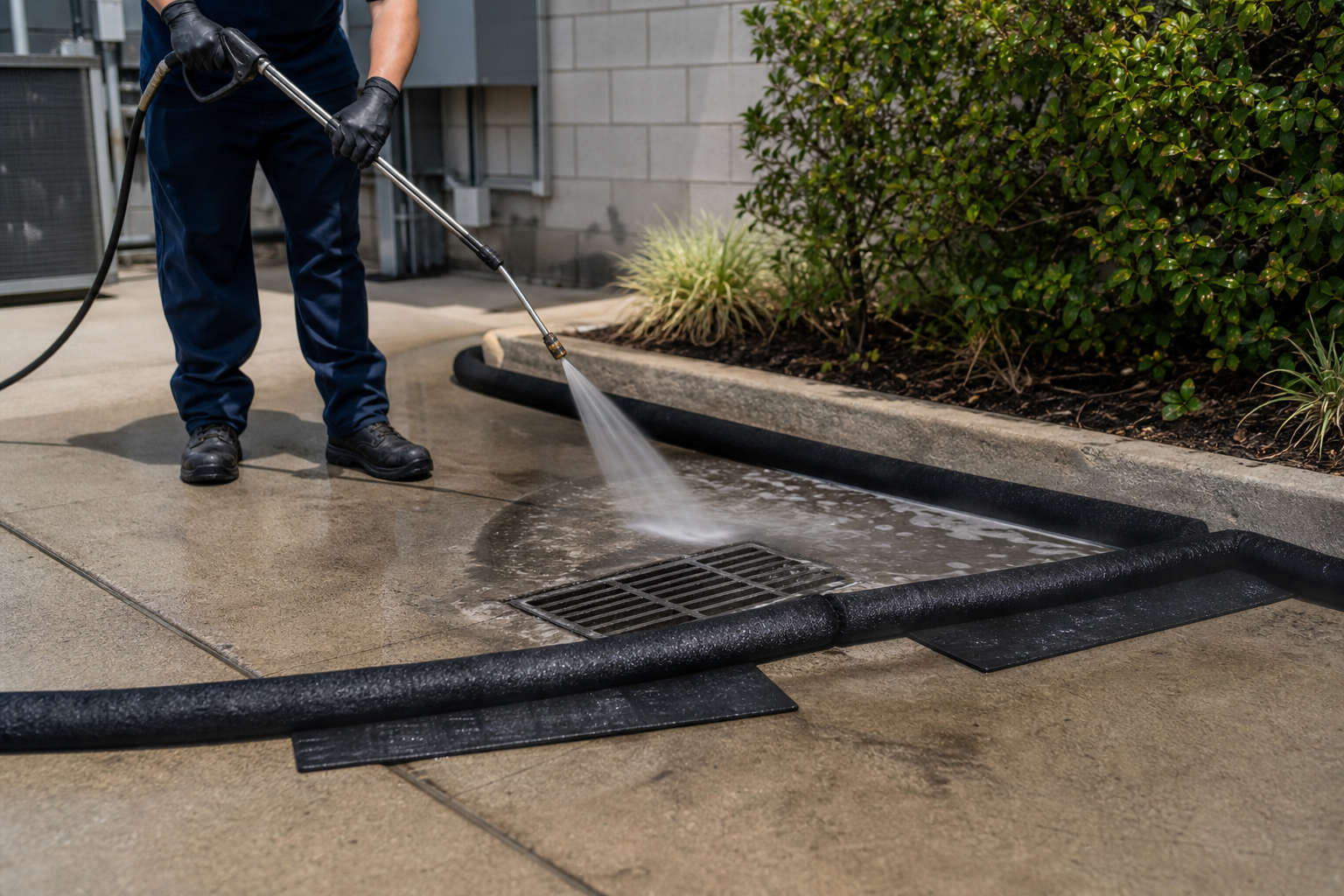
- Keep runoff controlled and directed properly.
- Use cleaners appropriate for the surface and local conditions.
For food service exterior cleaning and commercial concrete cleaning, runoff handling matters. A professional crew should account for drainage, nearby landscaping, and surface safety while cleaning.
FAQs
How do you remove grease from concrete?
Absorb excess grease, apply a concrete-safe degreaser, scrub the area, rinse, and repeat if needed. For older stains, hot water and stronger pretreatment may be necessary.
What is the best way to get oil out of concrete?
The best way is usually pretreatment plus scrubbing and hot water rinsing. Old oil stains often need more than pressure washing alone.
Can pressure washing remove grease stains from concrete?
Yes, pressure washing can help remove surface residue, but stubborn stains often need degreaser and heat for better results.
Does hot water help remove grease from concrete?
Yes. Hot water degreasing works better than cold water on many oily and greasy stains because it helps break down residue.
How do you clean grease off a driveway or sidewalk?
Use absorbent material first, then a degreaser, stiff brushing, and a controlled rinse. Keep runoff contained and repeat as needed.
What is the best cleaner for concrete grease stains?
A concrete-safe degreaser or detergent for grease stains is usually the best option. Choose a product based on whether the stain is fresh, old, light, or heavy.
How do you remove old grease stains from concrete?
Old stains usually require repeated pretreatment, strong agitation, and hot water cleaning. Complete removal is not always possible, but the stain can often be lightened.
Can a professional concrete degreasing service remove stubborn stains?
Yes, a professional concrete degreasing service can often improve results on stubborn stains by using stronger equipment, hot water, and better pretreatment.
How do restaurants clean grease from sidewalks and dumpster pads?
Restaurants typically use recurring commercial grease removal, hot water degreasing, and scheduled dumpster pad cleaning to control buildup and maintain safety.
How much does concrete grease removal cost?
Cost depends on the size of the area, stain severity, access, hot water needs, and whether recurring maintenance is included. Larger commercial properties usually need custom pricing.
If you need help with stubborn stains, driveway cleanup, or recurring commercial grease removal, Rolling Suds of Salt Lake – Park City can help with a free quote. garage cleaning in Salt Lake City & Park City.