
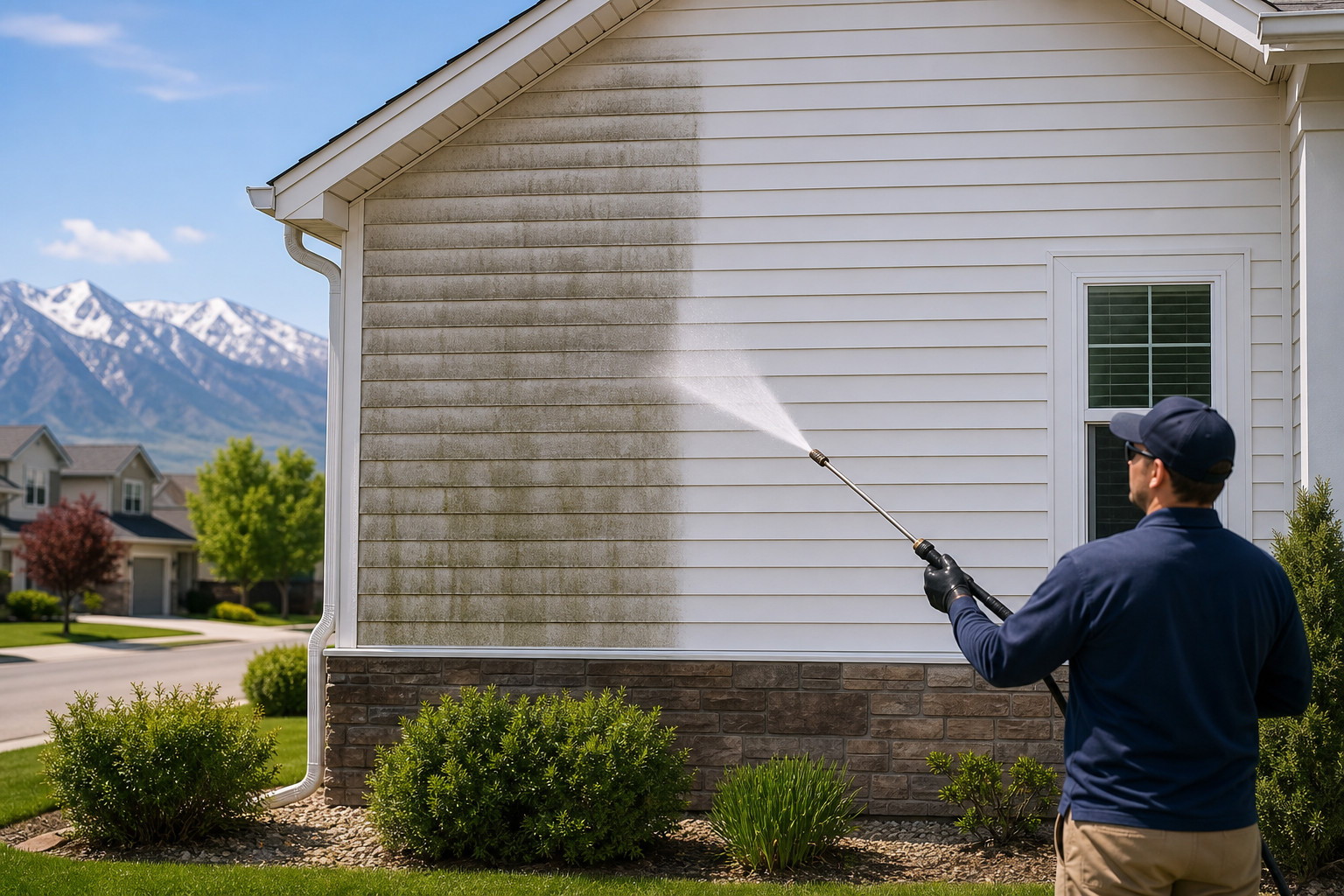
Grime on siding usually comes from dirt, pollen, pollution, salt residue, spider webs, mildew, algae, and other buildup that never seems to quit. In Utah, it changes with the seasons: spring pollen, summer dust, and winter grime can all cling to a home or building. Left alone, it leaves siding dull, streaked, and harder to clean later.
For homeowners, property managers, and commercial customers, the point is not just to remove grime from siding. It is to do it safely with a method that fits the material and the condition of the surface.
What grime on siding is and why it builds up
Siding collects grime because it faces wind, moisture, and airborne debris every day. On shaded sides of a building, moisture hangs around longer and can encourage algae or mildew. Near busy roads or commercial corridors, dust and pollution stick faster. Around trees and landscaping, pollen and organic residue show up quickly.
- Dirt and dust: Common on exposed walls and in windy areas.
- Pollen and plant debris: Seasonal and often sticky when mixed with moisture.
- Algae and mildew: More likely on damp, shaded, or north-facing surfaces.
- Salt and pollution: Can leave film and stains on exterior walls.
- Spider webs and insect residue: Often found around eaves, trim, and corners.
When a residential siding wash is overdue, grime starts bonding to the surface instead of sitting loosely on top. That is when a surface-safe cleaning plan matters most.
House washing vs exterior wall cleaning: which service fits your property?
House washing and exterior wall cleaning are related, but the right choice depends on the property. House washing usually means residential exterior cleaning for homes, where siding, trim, soffits, and similar surfaces are cleaned as one service. Exterior wall cleaning is broader and can apply to homes, apartments, retail centers, offices, and other structures.
At Rolling Suds of Salt Lake – Park City, we match the method to the surface and the setting. That matters for homes in Salt Lake City and Park City, and it matters just as much for commercial properties that need a cleaner, more professional look.
- House washing service: Best for residential siding, trim, and home exteriors.
- Exterior wall cleaning: Better for larger buildings, multifamily properties, and commercial exteriors.
- House wash for grime: Ideal when the main issue is visible buildup, dullness, or organic growth.
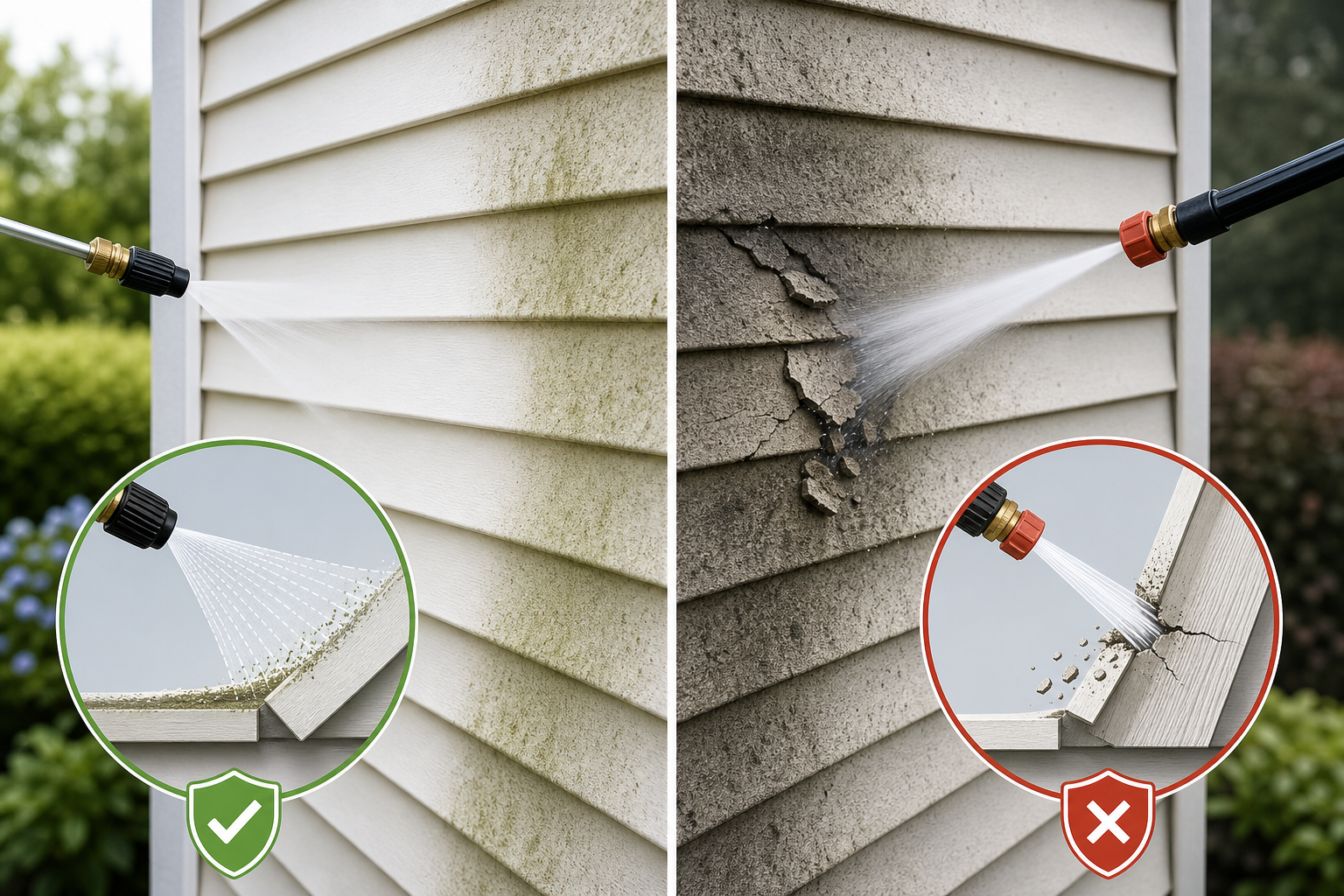
If the property has delicate materials or visible algae, soft washing is often the better answer than high pressure.
Why soft washing is safer for siding grime removal
Soft washing for siding uses low pressure and specialized cleaning solutions to loosen buildup without blasting the surface. That is especially important on materials that can be damaged by aggressive pressure washing. Instead of forcing grime off with brute force, soft wash grime removal targets dirt and organic growth chemically, then rinses it away gently.
That approach is usually the better choice for siding because it lowers the risk of etching, water intrusion, paint damage, and warped panels. It also tends to work better on algae, mildew, and stained areas that need more than plain water.
- Low-pressure cleaning: Safer for many siding types and finishes.
- Non-damaging exterior cleaning: Helps protect paint, seals, and joints.
- Targeted treatment: Useful for organic growth and staining.
For delicate surfaces, soft washing is usually the recommended option instead of pressure washing.
Learn more about our approach to safe exterior cleaning in Soft Washing Salt Lake City: Safe Exterior Cleaning.
Surface-specific guidance for vinyl, stucco, and painted siding
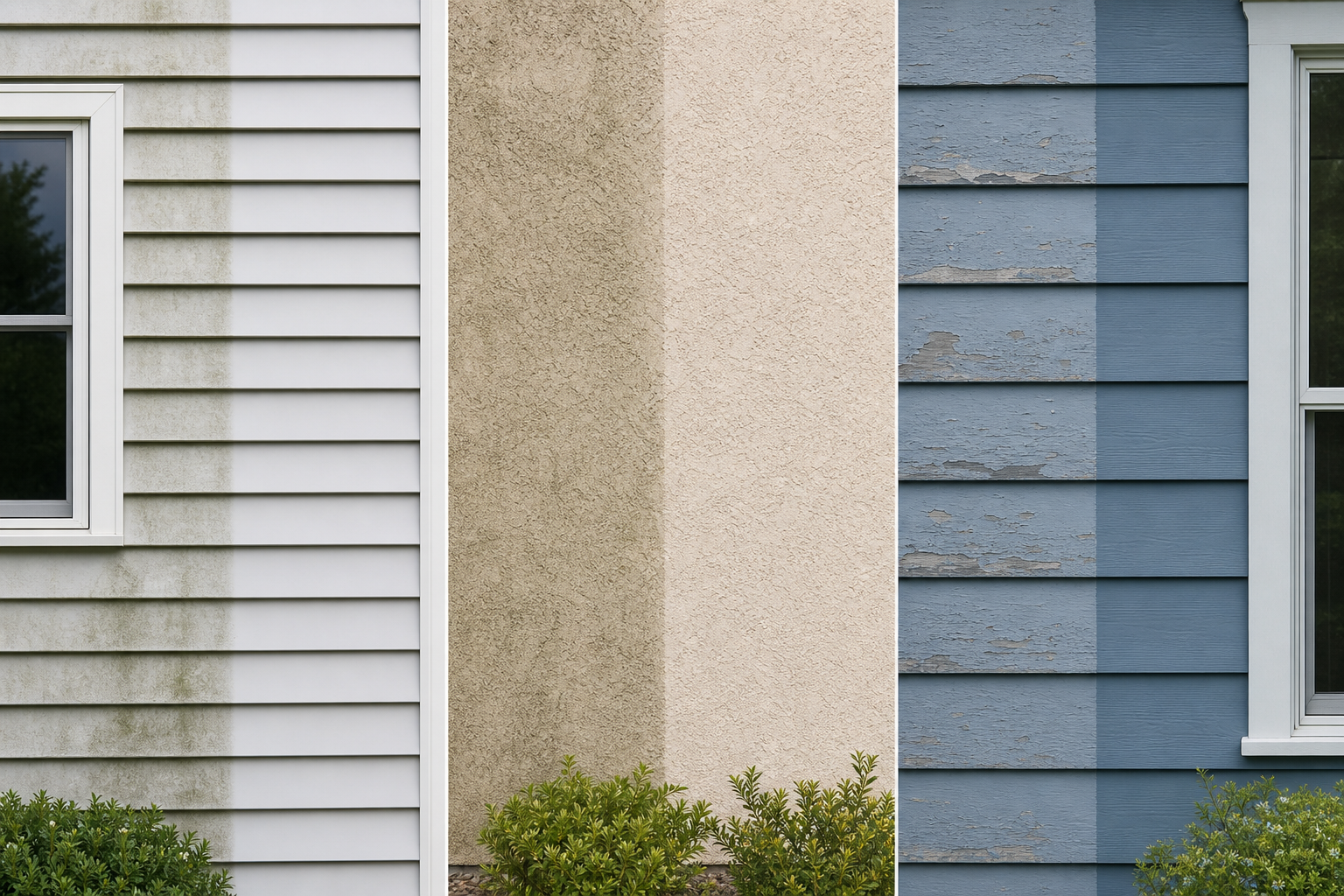
Different siding materials need different handling. What works on one surface can be too aggressive for another, so a proper siding dirt removal service starts with identifying the material and its condition.
- Vinyl siding cleaning: Usually works well with low-pressure washing and a cleaning solution. Avoid high pressure near seams or edges. A good example is a single-story vinyl ranch home with pollen buildup along the north side.
- Stucco: Needs extra care because cracks, texture, and age can make it more vulnerable to water intrusion. On an older stucco duplex, even small cracks can become a problem if the wrong method is used.
- Painted siding: Can be cleaned safely if the paint is in good condition, but chipped or aging paint may need gentler treatment.
- Wood or specialty finishes: Often require a case-by-case approach to avoid damage.
Algae and mildew removal from siding is possible on many surfaces, but results depend on how long the growth has been there and whether staining has already set in. Sometimes a cleaning brings back a lot of brightness. Other times, it improves the look without erasing older stains completely, and that is just reality.
Our siding dirt removal service process: inspection, cleaning, and protection
Every project starts with a quick inspection. We look at the siding material, visible buildup, problem areas, nearby landscaping, and any surface conditions that could affect the cleaning plan. That helps us choose the safest and most effective method.
- Inspect the exterior: Identify siding type, condition, and problem areas.
- Select the right method: Choose soft washing or another surface-safe cleaning approach.
- Protect the property: Take care around plants, windows, fixtures, and runoff paths.
- Apply cleaning solution: Break down grime, algae, and mildew safely.
- Rinse thoroughly: Remove loosened buildup and leave the surface looking refreshed.
That process is designed to clean effectively while protecting landscaping and surrounding property. It is one reason many property owners prefer a professional house siding cleaning team instead of trying to tackle everything themselves.
For broader exterior maintenance, our house washing Salt Lake City: A Local Guide explains how house washing fits into a full exterior care plan.
Benefits of professional siding cleaning for curb appeal and protection
Professional siding cleaning does more than make a building look better. It can improve curb appeal, support property value, and slow down the buildup that gets harder to remove later. For businesses, it also helps create a cleaner first impression for customers, tenants, and visitors.
- Better curb appeal: Cleaner siding makes the whole property look maintained.
- Surface protection: Removes buildup before it becomes more stubborn.
- Improved presentation: Important for listings, retail centers, HOAs, and commercial buildings.
- Less risk from misuse: Professional methods reduce the chance of damage.
For many customers, a residential siding wash is part of seasonal upkeep. For others, it is a smart pre-listing or pre-event cleanup that helps the property look its best.
How to prevent grime from coming back after siding cleaning
No exterior stays clean forever, but a few habits can slow future buildup. Properties with heavy shade, nearby trees, traffic exposure, or frequent moisture may need more regular maintenance than others.
- Schedule seasonal cleanings before buildup becomes heavy.
- Keep gutters and downspouts working properly to reduce runoff stains.
- Trim vegetation that keeps siding damp or shaded for long periods.
- Address mildew or algae early instead of waiting for widespread staining.
- Rinse problem areas sooner if the property is exposed to dust, pollen, or salt.
Those habits support non-damaging exterior cleaning and help siding look better between professional washes.
FAQ: siding cleaning cost, safety, frequency, and damage concerns
How do you remove grime from siding without damaging it?
Use the right cleaning method for the surface. For most delicate exteriors, that means low-pressure cleaning with a soft wash process instead of high pressure.
Is soft washing better than pressure washing for siding?
Yes, for many siding types it is. Soft washing is usually safer and more effective for organic buildup, paint, and delicate materials.
What causes grime buildup on house siding?
Dirt, pollen, moisture, algae, mildew, salt, and pollution are the most common causes.
How often should siding be washed?
It depends on exposure, shade, weather, and surrounding vegetation. Many properties benefit from annual or seasonal service.
Can you remove mold, mildew, and algae from siding?
In many cases, yes. Results depend on the surface, the severity of the growth, and how long it has been present.
How much does siding cleaning cost?
Cost usually depends on size, material, condition, access, and whether the job is residential or commercial. A professional quote is the best way to price it accurately.
Is siding dirt removal service safe for vinyl, stucco, and painted surfaces?
Yes, when the correct method is used. That is why material-specific assessment matters before cleaning begins.
If you are ready to remove grime from siding and want a safe, professional result, Rolling Suds of Salt Lake – Park City can help with the right house washing or exterior wall cleaning service for your property.