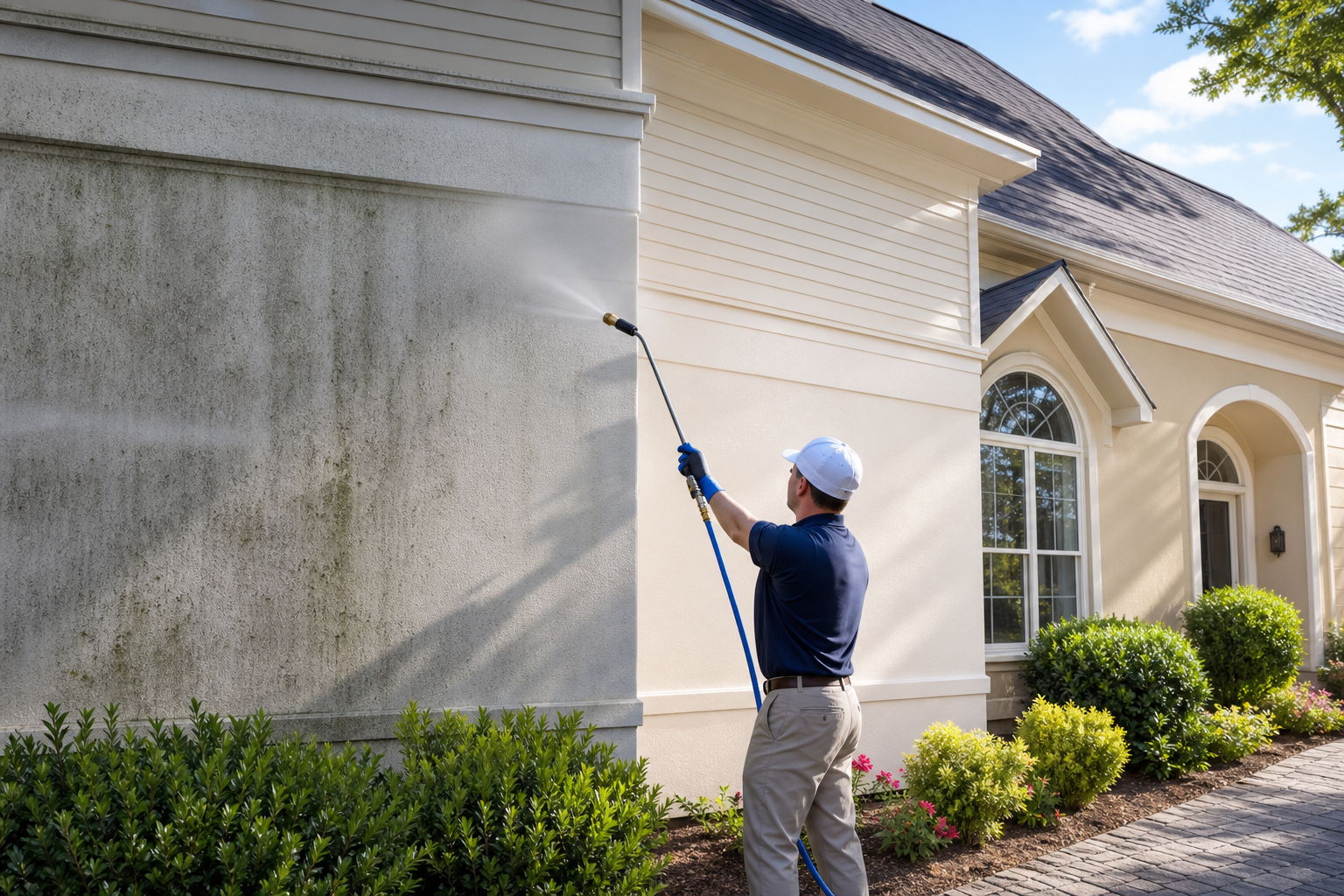
If you need to remove mildew from exterior walls, the safest approach is to identify the growth first and match the cleaning method to the surface. At Rolling Suds of Salt Lake – Park City, we help homeowners, property managers, HOAs, restaurants, and commercial properties clean siding and building exteriors without unnecessary damage. In many cases, mildew removal soft washing is the right solution because it cleans organic growth at low pressure instead of forcing contaminants deeper into the finish.
How to identify mildew, algae, or mold before you clean
Before you start mildew stain cleaning, look closely at the color, texture, and pattern. Mildew often appears as flat gray, white, or black spots on shaded surfaces. Algae is usually green, slimy, or streaky, and it can spread where moisture sits. Mold may look darker and patchier, and it sometimes suggests a deeper moisture issue. Organic growth removal works best when you know what you are treating, because not every stain responds the same way.
- Mildew: powdery or spotty growth, often on painted or vinyl surfaces
- Algae: green film or streaking, especially where water runs off
- Mold: darker growth that may need closer inspection for moisture problems
If you are unsure, a professional inspection can help you choose the safest exterior wall mildew treatment. See our exterior house washing guide for related surface-safe cleaning tips.
Why mildew forms on siding and exterior walls
Mildew grows when surfaces stay damp long enough for organic material to settle. Shade, humidity, poor drainage, irrigation overspray, and roof runoff all contribute to house siding mildew cleanup problems. Homes and commercial buildings with north-facing walls or limited sun exposure often show buildup sooner. Dust, pollen, and tree debris can also feed growth and make the wall look dirty faster.
For property owners, the goal is not just to wash the stain away. A good house wash mildew removal service also looks for the moisture pattern behind the growth so the problem does not return as quickly.
Soft washing vs pressure washing for mildew removal
When comparing pressure washing vs soft washing, the key difference is force. Pressure washing uses higher water pressure, which can be useful on durable surfaces like concrete. Soft washing uses lower pressure and the right cleaning solution to break down organic growth safely. For siding, trim, and many painted surfaces, soft washing is usually the better choice.
- Soft washing for mildew is lower risk for delicate materials
- High pressure can force water behind siding or damage coatings
- Soft washing works well for stains caused by organic growth
- Pressure washing is better reserved for stronger surfaces when appropriate
For most homes, mildew removal soft washing delivers a cleaner result with less risk. Our soft washing guide explains why low pressure matters on delicate surfaces.
Surface-safe mildew treatment by exterior material
Different surfaces need different methods. A safe surface-safe cleaning plan protects the finish while still removing the growth. The right exterior wall mildew treatment depends on the material, age, and condition of the surface.
- Vinyl: Usually responds well to soft washing and controlled rinsing
- Stucco: Needs gentle cleaning to avoid water intrusion or surface erosion
- Brick: Can often be cleaned effectively, but mortar joints need care
- Painted siding: Requires extra caution on older or failing coatings
Do not use: aggressive pressure, harsh scrubbing on fragile finishes, or untested chemicals on older paint. If the coating is already chalking or peeling, cleaning should be adjusted to avoid making the damage worse.
What a professional mildew removal process looks like
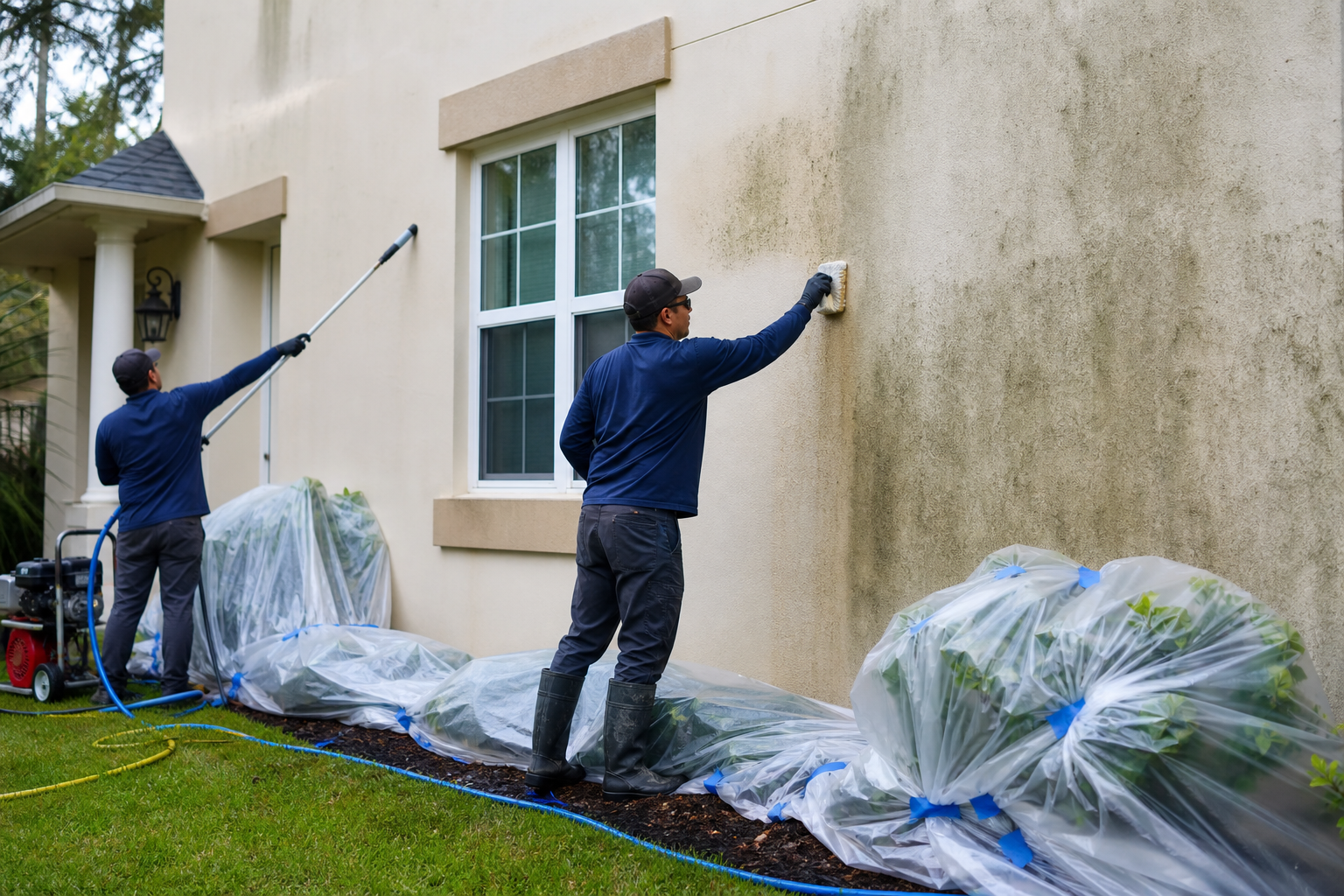
A professional organic stain removal service usually starts with a property walkthrough and surface check. From there, the crew chooses the solution strength, protects nearby landscaping, and applies pre-treatment evenly. After dwell time, the surface is rinsed with controlled pressure and the runoff is managed carefully.
- Inspect the wall material and stain severity
- Protect plants, windows, and surrounding finishes
- Pre-treat the affected area
- Rinse with the right pressure for the material
- Review results and note any embedded staining limits
DIY cleanup vs hiring an insured exterior cleaning company
Some light staining can be handled as a DIY project, but elevated walls, delicate siding, and heavy growth often justify hiring an insured pressure washing service. The biggest risks are surface damage, ladder accidents, and using the wrong cleaning strength. If you are trying to choose between DIY and hiring an exterior cleaning company, consider the value of the surface and how visible the area is.
Hire a professional when the job involves tall walls, commercial property, HOA common areas, or surfaces that must look consistent for guests, tenants, or customers. For many property owners, safe mildew removal is worth the added peace of mind.
Cost factors for exterior wall mildew removal
The price to remove mildew from exterior walls depends on several variables. A small vinyl home with light buildup will usually cost less than a multi-building property with stubborn staining. Access, height, surface type, and how long the growth has been present all affect the final quote.
- Square footage and number of walls
- Material type, such as vinyl, stucco, brick, or painted siding
- Severity of the organic growth
- Height and access challenges
- Need for extra stain treatment or recurring maintenance
For commercial clients, pricing may also reflect scheduling needs, documentation, and work around guests or tenants. That is why an organic stain removal service is usually best quoted after a quick site review.
How to prevent mildew from coming back
Once the surface is clean, prevention matters. To prevent mildew growth, reduce the moisture conditions that help it return. Trim back heavy shade where possible, keep gutters and downspouts working, and correct drainage issues that leave walls wet after rain or irrigation. Seasonal cleaning also helps preserve curb appeal restoration and reduces the amount of buildup that turns into visible staining.
- Schedule routine exterior washing before buildup gets heavy
- Keep sprinkler spray off walls and siding
- Clear debris from rooflines, gutters, and ledges
- Watch north-facing or shaded elevations more closely
For homes and commercial properties in Utah, a recurring maintenance plan is often the easiest way to keep siding and exterior walls looking clean longer.
Frequently asked questions
How do you remove mildew from exterior walls without damaging the surface?
Use a surface-safe treatment matched to the material, usually a low-pressure soft wash with proper pre-treatment and controlled rinse pressure.
Is soft washing better than pressure washing for mildew on siding?
Yes, for most siding and other delicate surfaces, soft washing is the lower-risk option and is usually preferred.
Can mildew stains be removed from vinyl, stucco, brick, or painted siding?
Often yes, but results depend on the surface type, how long the stain has been present, and whether the discoloration is embedded.
What causes mildew to grow on exterior walls?
Common causes include shade, humidity, poor drainage, frequent moisture, and organic debris sitting on the surface.
Should I clean mildew myself or hire a professional exterior cleaning company?
If the surface is delicate, elevated, heavily stained, or valuable to protect, hiring a professional is usually the safer choice.
How long does soft washing keep mildew from coming back?
It depends on climate, shade, moisture exposure, and maintenance, but regular cleaning helps slow regrowth significantly.
How much does exterior wall mildew removal cost?
Pricing varies by square footage, material, severity, access, and whether additional stain treatment is needed.
Is mildew on exterior walls dangerous or just cosmetic?
It is often mostly cosmetic on exterior surfaces, but it can signal moisture conditions that should be addressed and may worsen over time.
If you want help with mildew on siding removal or a larger algae and mold cleaning project, Rolling Suds of Salt Lake – Park City can recommend the right approach for your property and provide a free quote.