Clean, safe walkways do more than improve curb appeal. For Rolling Suds of Salt Lake – Park City customers, they also help reduce slip risk at homes, storefronts, apartment communities, restaurants, and commercial properties across Utah. When grime, algae, moss, salt residue, and standing moisture build up, concrete and pavers can lose traction fast.
This guide explains how to clean slippery sidewalks safely, when to use low-pressure methods, and how to choose the right approach for your surface. If you manage a property with high foot traffic, recurring buildup, or seasonal moisture, professional walkway cleaning can help you keep entries and walkways cleaner and more presentable.
Why Slippery Sidewalks Become a Safety Problem
Slippery sidewalks are a maintenance issue and a liability concern. Even if the surface looks only lightly dirty, a thin layer of algae, mildew, dust, or greasy residue can reduce traction. Add rain, snowmelt, irrigation overspray, or winter slush, and the walking surface may become hazardous.
- Moisture creates the immediate slip condition.
- Grime and organic growth reduce traction.
- Heavy traffic spreads residue and compacted dirt.
- Shade and poor drainage keep surfaces damp longer.
That is why safety focused sidewalk cleaning matters. It is not just about making the concrete look bright again; it is about removing the layer that makes walking surfaces slick.
What Causes Sidewalk Grime, Algae, and Buildup
Most sidewalk grime removal projects start with a few predictable causes. In shaded areas, algae and moss often grow faster because moisture lingers longer. Near landscaping, sprinkler spray can keep concrete damp enough for organic buildup to take hold. In winter, salt residue and tracked-in debris can leave a film that attracts more dirt.
Common causes include:
- Shade and limited sun exposure
- Standing water or poor drainage
- Organic debris from trees and landscaping
- Winter residue, salt, and de-icing products
- Frequent foot traffic in entrances and paths
For algae removal from walkways, the fix usually starts with removing the buildup at the surface instead of trying to cover it up.
Safe Methods for Cleaning Walkways Without Damaging Surfaces
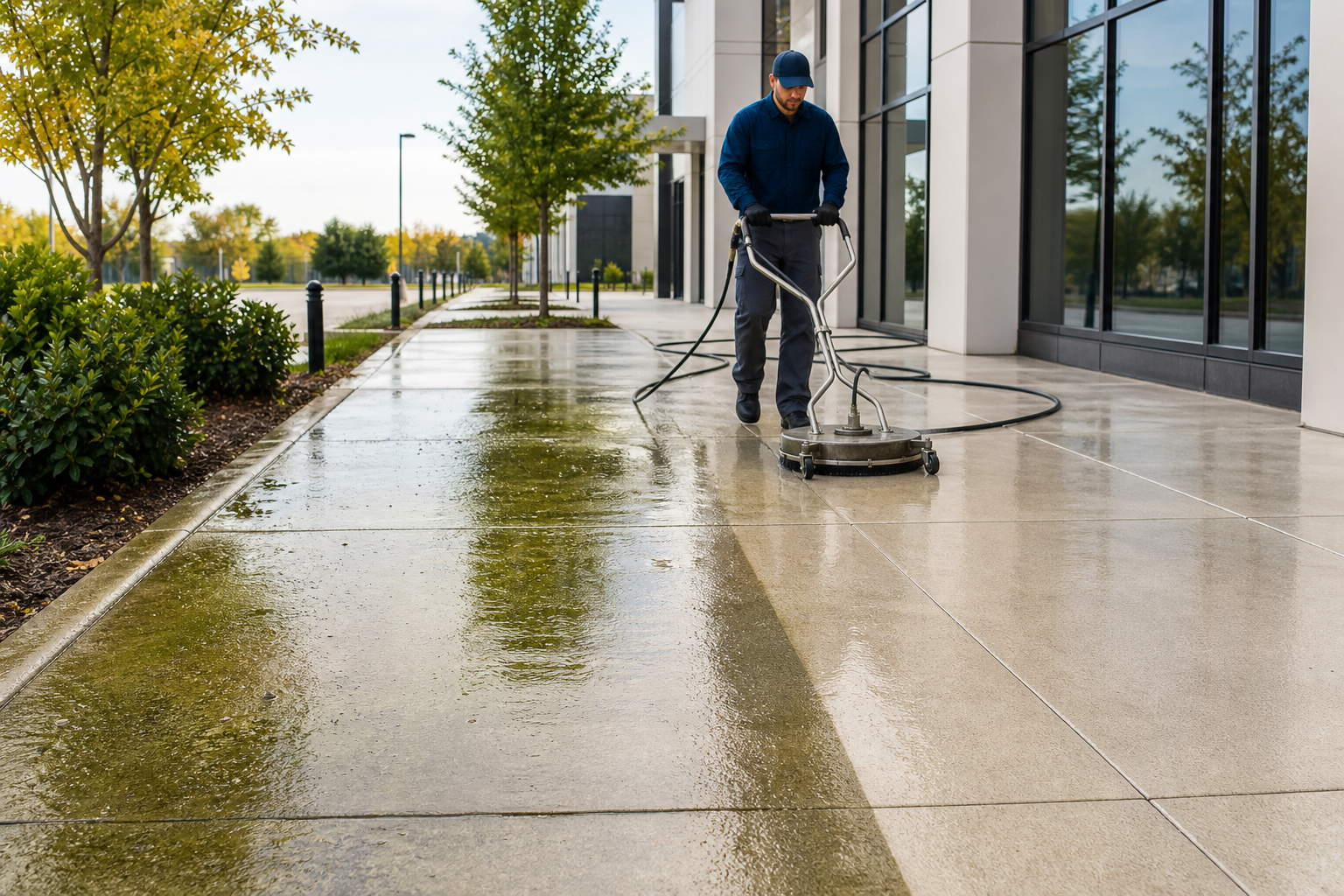
Gentle sidewalk cleaning is often the best choice for delicate or aging surfaces. A careful rinse, surface cleaner, or lower-pressure wash can remove buildup without etching concrete, loosening joint sand, or damaging nearby landscaping.
Pressure washing sidewalks safely depends on the material:
- Plain concrete: often handles more aggressive cleaning when the surface is in good condition.
- Pavers: may need lower pressure to protect joints and surface finish.
- Stamped surfaces: usually require extra caution to avoid texture damage.
- Sealed walkways: should be cleaned with methods that protect the coating.
Concrete cleaning without damage is about matching the method to the surface, not forcing one approach on every property. For some jobs, low pressure exterior cleaning is the safest and most effective option.
Commercial Walkway Washing for Properties That Need Reliable Results
Commercial walkway washing is a strong fit for properties that need dependable appearance and safer pedestrian areas week after week. Restaurants, retail centers, apartment communities, and office buildings all benefit from recurring maintenance because buildup returns quickly in high-use areas.
Recurring walkway maintenance services can help with:
- Cleaner first impressions for guests and tenants
- Reduced buildup around entrances and common areas
- Better support for safety and maintenance goals
- More consistent curb appeal across the season
For business sidewalk cleaning, scheduled service is often easier and more cost-effective than waiting until grime, algae, and discoloration become obvious.
How to Choose the Right Cleaning Approach for Your Surface
The right method depends on surface type, surface age, and the amount of slip risk present. Non-slip sidewalk cleaning starts with a quick assessment of the material and condition before any water is applied.
Use this simple framework:
- Light buildup: try gentle cleaning first.
- Organic growth: use a process suited for algae and moss removal.
- Durable concrete with heavy buildup: pressure washing may be appropriate.
- Stamped, sealed, or aging surfaces: professional evaluation is the safer choice.
If your goal is slip-resistant walkway cleaning, choose the least aggressive method that still removes the contaminants causing the problem. That approach supports sidewalk traction improvement without unnecessary wear.
FAQ: Slippery Sidewalk Cleaning, Safety, and Maintenance
How do you clean slippery sidewalks safely? Use a surface-appropriate method that removes grime and organic growth without damaging the concrete, coating, or adjacent landscaping.
What causes sidewalks to become slippery? Moisture, algae, moss, dirt, salt residue, and trapped organic buildup are the most common causes.
Can pressure washing remove algae from walkways? Yes, but it should be matched to the surface and applied safely to avoid etching or surface damage.
How often should commercial sidewalks be cleaned? It depends on traffic, shade, moisture, and debris, but many commercial properties benefit from recurring seasonal or quarterly service.
Is sidewalk pressure washing safe for all surfaces? Not always; delicate, sealed, stamped, or aging surfaces may need gentler methods or professional evaluation.
Will sidewalk cleaning help prevent slips and falls? It can reduce buildup that contributes to slick conditions, especially when paired with drainage, sealing, and maintenance planning.
If you need professional sidewalk washing for a commercial property or a multi-tenant site, Rolling Suds of Salt Lake – Park City can recommend the right cleaning method and create a recurring plan that fits your property goals.