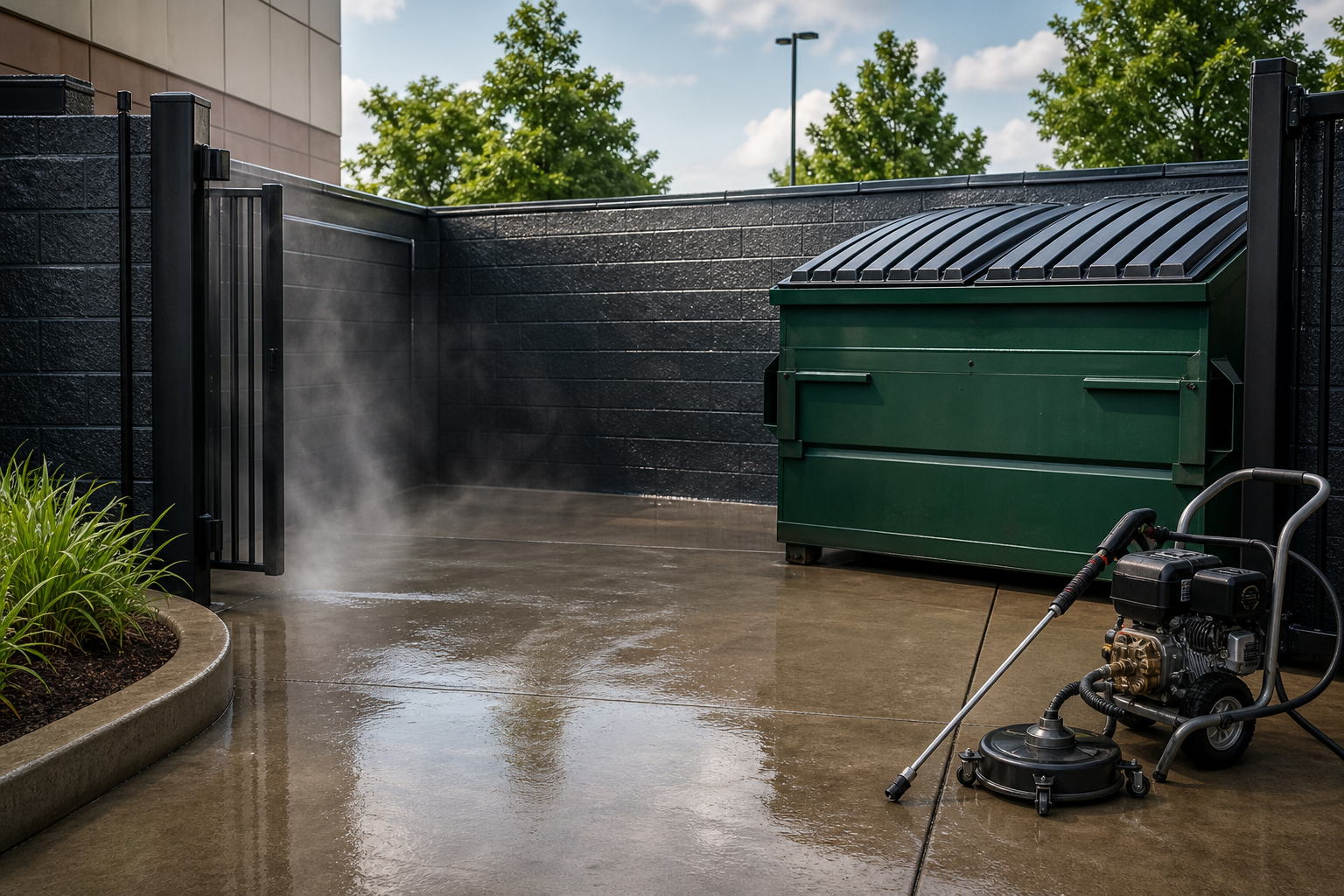
If you need to clean dumpster pad smell at a commercial property, the goal is not to cover it up with fragrance. The real fix is source removal: break down grease, remove sludge and debris, sanitize the surface, and address drainage or overflow issues that keep the odor coming back.
For restaurants, apartment communities, retail centers, and managed facilities, dumpster pad odor removal is part of regular property care. A dirty waste area can affect curb appeal, tenant satisfaction, and even how customers judge the entire site.
Commercial dumpster pad cleaning is often the fastest way to reset a bad-smelling waste area and prevent the problem from spreading to nearby doors, sidewalks, or loading zones.
Dumpster Pad Odor Cleanup Basics
Dumpster pad odor cleanup starts with understanding what is actually causing the smell. Organic waste, grease, food residue, and leachate can soak into concrete and collect around curbs, drains, and enclosure corners. If the surface is not cleaned thoroughly, the odor can return quickly.
- Remove loose trash and debris first.
- Degrease the pad to break down residue.
- Use hot water pressure washing for better soil removal.
- Sanitize and deodorize after washing.
When business owners search for clean dumpster pad smell solutions, they usually need more than a quick rinse. Waste area deodorizing works best when the actual buildup is removed.
Signs Your Trash Area Needs Sanitation Cleaning
A trash area often shows warning signs before the odor becomes severe. If you notice any of the issues below, the site likely needs trash area sanitation cleaning or a recurring maintenance plan.
- Sticky residue, dark stains, or greasy buildup on concrete
- Overflow around the dumpster or enclosure
- Pest activity, flies, or visible rodent access points
- Standing water, runoff, or poor drainage
- A lingering smell even after the trash is emptied
A cleaner dumpster area is easier to maintain when problems are caught early. Waiting too long usually means heavier degreasing and more frequent service.
What Causes Dumpster Pad Odors and Grease Buildup
Most dumpster pad odors come from a mix of organic waste and surface contamination. Grease and odor cleanup becomes necessary when food waste, sludge, and liquid residue get trapped on porous concrete or collect near the drain area.
Common causes include:
- Food waste and leaks from bags or bins
- Grease drips from restaurant waste streams
- Urine or animal waste in open-access areas
- Poor drainage that leaves residue behind
- Infrequent cleaning that allows buildup to harden
Oil stain removal and sludge removal often go together because these materials bond to the surface and keep producing odor until they are fully broken down.
How Commercial Dumpster Cleaning Works
Commercial dumpster cleaning is more effective when it follows a repeatable process. A professional crew typically starts with debris removal, then applies commercial degreasing products, followed by hot-water pressure washing and post-clean sanitation.
The process may include:
- Dry cleanup and debris removal
- Pre-treatment with degreaser
- Hot water pressure washing
- Surface cleaning for grease and residue
- Sanitizing and deodorizing
For durable concrete, pressure washing dumpster pad surfaces with hot water can lift grime that cold water may leave behind. This is especially helpful for restaurant and high-traffic waste areas.
Drainage, Runoff, and Sanitation Considerations
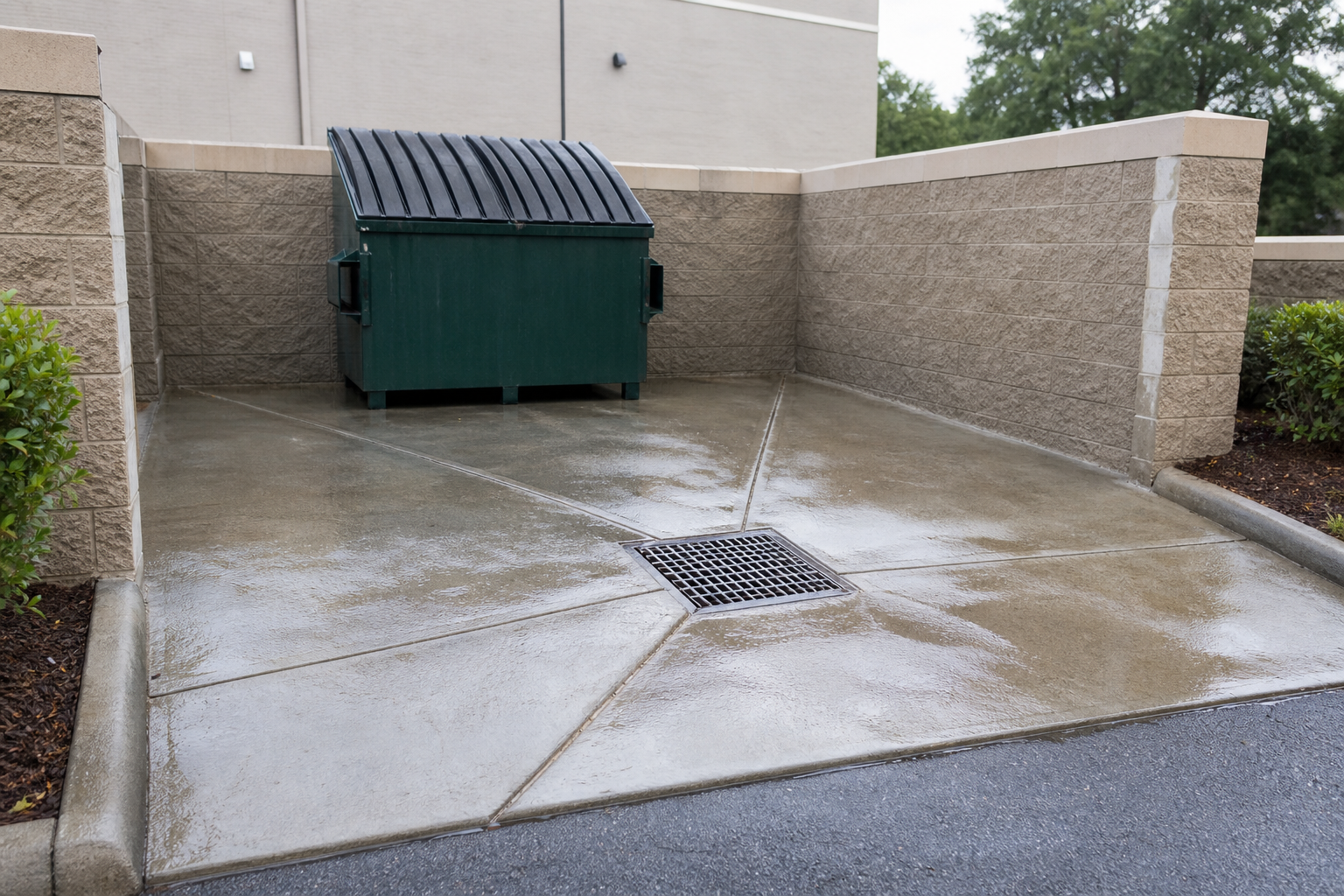
Commercial waste area cleaning should also account for where the runoff goes. If wastewater collects in the same area, the odor problem may return even after a thorough wash. Drainage issues can point to a bigger maintenance concern that needs attention from the property team.
In some facilities, sanitary pad washing must be coordinated with site rules, discharge requirements, or local compliance expectations. If a dumpster area repeatedly smells bad after cleaning, it may be a sign of a drainage, slope, or enclosure problem rather than just surface dirt.
Facility maintenance cleaning works best when the surface and the site conditions are addressed together.
When to Choose Professional Service vs DIY
Light dumpster area maintenance can sometimes be handled in-house, especially for small properties with minimal buildup. But recurring dumpster pad service is often the better option for larger sites, restaurants, and any property with ongoing grease or odor problems.
DIY may be enough when:
- The area only needs light rinsing
- There is no heavy grease buildup
- Odor is minimal and temporary
Professional service is a better fit when there is strong odor, staining, pests, or repeated buildup. A property sanitation service can also provide a more consistent schedule and better results on commercial surfaces.
Restaurant and Commercial Maintenance Frequency
Restaurant dumpster pad cleaning usually needs to happen more often than low-traffic property cleaning. Food service sites generate more grease, liquid waste, and foot traffic around the enclosure, which means odors return faster.
Typical maintenance guidance:
- Restaurants and drive-thrus: frequent recurring service, often monthly or more often depending on volume
- Retail and office sites: periodic maintenance based on use and waste volume
- Apartment communities and HOAs: scheduled service to prevent overflow and odor buildup
Commercial waste area cleaning works best as a recurring habit, not a one-time reaction after the smell becomes obvious.
Benefits of Regular Dumpster Pad Maintenance
Regular dumpster pad maintenance protects more than just appearance. It can improve safety, reduce odor complaints, and support a cleaner tenant or customer experience.
- Better curb appeal for businesses
- Less odor around entrances and service areas
- Improved tenant experience and customer perception
- Reduced pest attraction
- Better health and safety compliance support
An odor-free trash enclosure helps the entire property feel better maintained. That matters for restaurants, property managers, and multi-location operators alike.
Inspection Checklist for Property Managers and Tenants
Use this quick checklist before scheduling trash enclosure cleaning or facility maintenance cleaning:
- Is there a persistent smell around the dumpster pad?
- Are there grease spots, sludge, or dark stains?
- Is trash overflowing or leaking?
- Do you see pests, flies, or rodent activity?
- Is drainage slow or pooling near the pad?
- Are enclosure walls, gates, or pads visibly dirty?
If several items apply, the site likely needs professional site cleanliness improvement rather than basic sweeping alone.
FAQ: Dumpster Pad Odor Removal and Cleaning
How do you clean a dumpster pad smell?
Remove debris, degrease the surface, hot-water pressure wash the pad, then sanitize and deodorize to treat the source.
What removes odor from a dumpster area?
Source removal works best: grease cleanup, sludge removal, sanitizing, deodorizing, and fixing drainage or overflow issues.
How often should a dumpster pad be cleaned?
It depends on use, but restaurants and other high-traffic properties usually need recurring service more often than low-traffic sites.
Can pressure washing remove grease and trash odors?
Yes, especially with hot water and commercial degreasers, though persistent odors may also require sanitizing or drainage correction.
Do you need hot water to clean a dumpster pad?
Hot water is strongly recommended because it breaks down grease and organic buildup more effectively than cold water.
If your property needs commercial dumpster cleaning or sanitary pad washing in Salt Lake City, Park City, or nearby Utah communities, Rolling Suds of Salt Lake – Park City can help with recurring maintenance or one-time cleanup.