
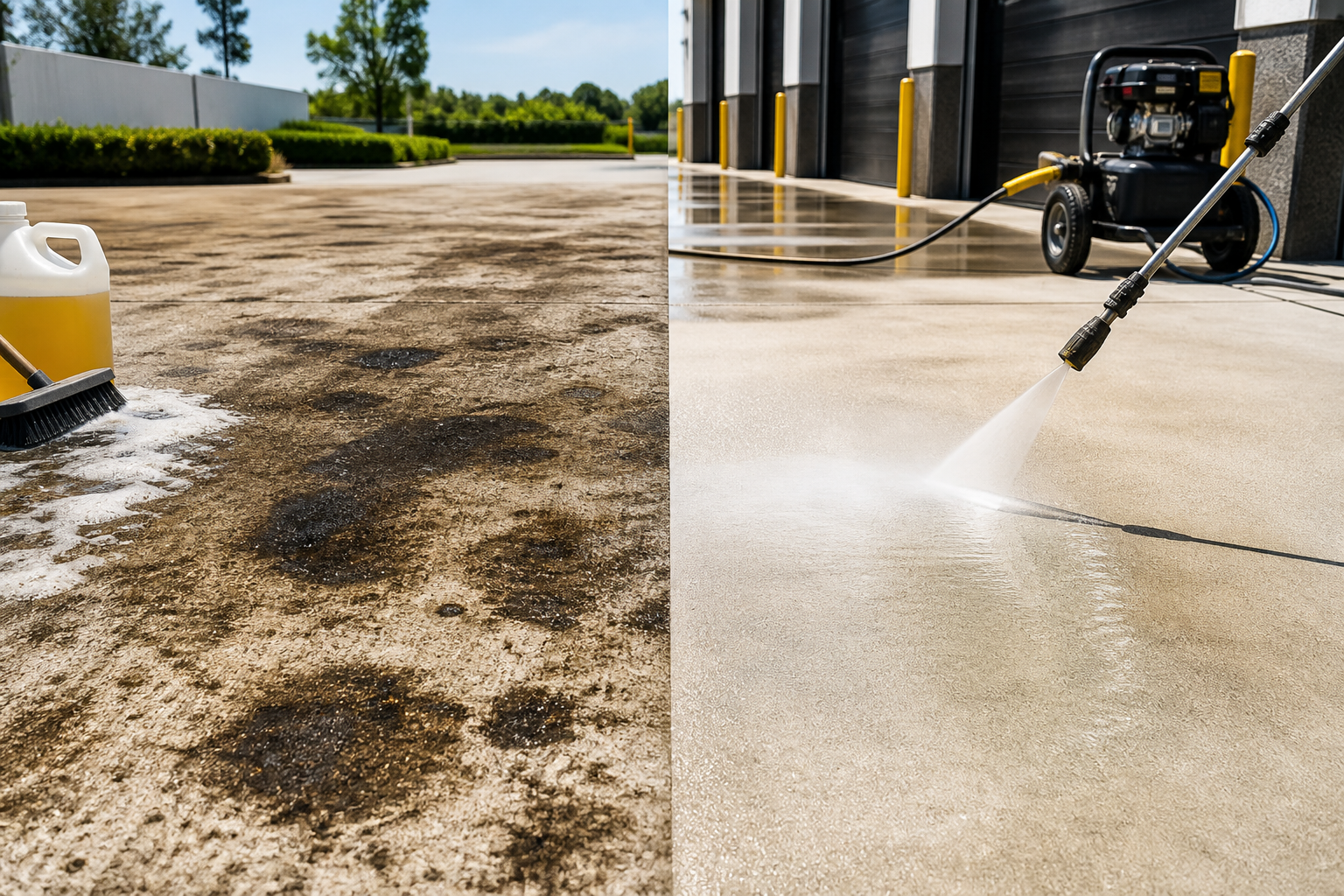
Oil stain removal depends on two things: how old the stain is and what surface it has soaked into. Fresh spills on concrete, driveways, garage floors, parking lots, dumpster pads, and pavers are much easier to lift than oxidized, embedded marks that have sat for weeks or months. The best approach is to match the cleaning method to the stain age and surface type instead of using one aggressive fix for everything.
For homeowners and property managers in Salt Lake City, Park City, and nearby Utah communities, the goal is not just to make the spot look better for a day. It is to use a safe surface stain treatment that removes as much oil as possible without etching concrete, harming pavers, or spreading runoff into unwanted areas.
Oil Stain Removal Overview: Fresh Spills, Set-In Stains, and Surface Types
Fresh oil usually sits on top of the surface first. That gives you a chance to absorb it before it migrates deeper into pores and joints. Old stains are different. They often become dark, dry, and harder to treat because the oil has already penetrated the material or attracted dirt over time.
- Fresh spills: absorb first, then degrease.
- Set-in stains: need more dwell time and repeated treatment.
- Oxidized marks: may improve, but rarely disappear in one pass.
- Porous surfaces: concrete and some pavers soak in oil faster than sealed surfaces.
The right method also changes based on the location. A driveway oil spot removal job may be straightforward, while parking lot oil cleanup for a commercial site may need runoff control, documentation, and storm drain protection.
Driveway Oil Spot Removal and Garage Oil Stain Cleaning Methods
For driveway oil spot removal, start as soon as possible. Use absorbent material such as kitty litter, oil absorbent, or paper towels to remove what has not yet soaked in. After that, apply a degreaser or oil stain remover for concrete and let it sit long enough to break down the residue.
- Blot or absorb fresh oil immediately.
- Apply a concrete-safe degreaser.
- Scrub with a stiff brush.
- Allow dwell time before rinsing.
- Repeat if the stain lightens but does not fully release.
Garage oil stain cleaning follows a similar process, but enclosed floors may need extra care to avoid slippery residue and overspray. If the stain is old, the best result may come from multiple treatments instead of one heavy application. When the oil has spread across a large garage bay or multiple parking spaces, professional help can save time and reduce the chance of damaging the floor finish.
Parking Lot Oil Cleanup and Concrete Degreasing Service for Commercial Properties
Commercial properties often deal with recurring leak points. Parking lot oil cleanup near customer parking, delivery zones, or employee stalls is usually more effective when the area is added to a regular maintenance plan. Restaurants, apartment communities, retail centers, and facility managers also need a process that protects the site while cleaning visible stains.
A professional concrete degreasing service typically includes pretreatment, agitation, dwell time, hot water or pressure-assisted rinsing when appropriate, and containment or runoff planning. Dumpster pad degreasing may also require extra attention because grease and food residue can spread quickly and create odor or slip concerns.
- Identify recurring hotspot areas.
- Control runoff and protect storm drains.
- Use the correct chemical for the surface.
- Document completed work when needed.
- Schedule recurring service for high-traffic sites.
For property managers and restaurant operators, a recurring plan is often more practical than chasing individual stains after they become visible to customers.
How to Remove Oil Stains Safely and Effectively on Concrete, Pavers, and Sealed Surfaces
How to remove oil stains from concrete safely depends on whether the surface is porous, sealed, or decorative. Concrete can usually handle stronger degreasers than pavers or coated surfaces, but it still should not be blasted with unnecessary pressure. The best way to remove oil stains is often pretreatment first, then controlled rinsing.
Pressure washing oil stains can help after pretreatment, but pressure alone rarely solves the problem. Too much pressure can scar the surface, drive oil deeper, or strip sealers. Soft wash vs pressure wash for stains is not an either-or question; the right method depends on the material. Soft washing may be better for delicate or sealed areas, while pressure washing may be appropriate on durable concrete after chemical breakdown has done most of the work.
If you want to remove grease from driveway surfaces without harming the finish, choose a cleaner made for the substrate and follow the label directions carefully. If the area is decorative, older, or sealed, test a small spot before treating the whole section.
Handling Stubborn Oil Stains: Old, Embedded, and Repeatedly Soiled Areas
Stubborn oil stain removal usually requires realistic expectations. Old stains may fade significantly, but they may not disappear completely, especially if they have been reinforced by repeated vehicle leaks or long-term buildup. In those cases, the goal is often to improve appearance enough that the stain is no longer a distraction.
For heavily used surfaces, an oil stain remover for concrete may need to be combined with sealing, routine cleaning, or spot maintenance. Surfaces that get repeated drips from parked cars, forklifts, or delivery trucks are best handled with an ongoing plan instead of one-time treatment.
- Treat the stain more than once if needed.
- Use a product suited to the surface type.
- Consider sealing after cleaning if appropriate.
- Build ongoing maintenance into the property plan.
If you manage a commercial property or want a cleaner, safer-looking exterior, Rolling Suds of Salt Lake – Park City can help with surface stain treatment, concrete cleaning, and recurring maintenance for high-traffic areas.
Frequently Asked Questions
How do you remove oil stains from concrete?
Absorb fresh oil first, apply a degreaser or oil stain remover, agitate the area, allow dwell time, then rinse and repeat if needed.
What is the best way to clean oil spots from a driveway?
The best method depends on stain age, but for many driveways a degreaser plus scrubbing is the safest starting point before considering pressure washing.
Can pressure washing remove oil stains?
Pressure washing can help after pretreatment, but by itself it often does not fully remove oil and can worsen some surfaces if used too aggressively.
Is a degreasing service better for garage oil stains?
Yes, especially for older or larger garage oil stains, because professional degreasing services can combine proper chemicals, dwell time, and extraction methods.
Do commercial parking lot oil stains require special cleaning?
Often yes, because commercial sites may need runoff control, storm drain protection, recurring hotspot treatment, and documentation of completed work.
For a free quote on oil stain removal, driveway oil spot removal, parking lot oil cleanup, or concrete degreasing service, reach out to Rolling Suds of Salt Lake – Park City.