
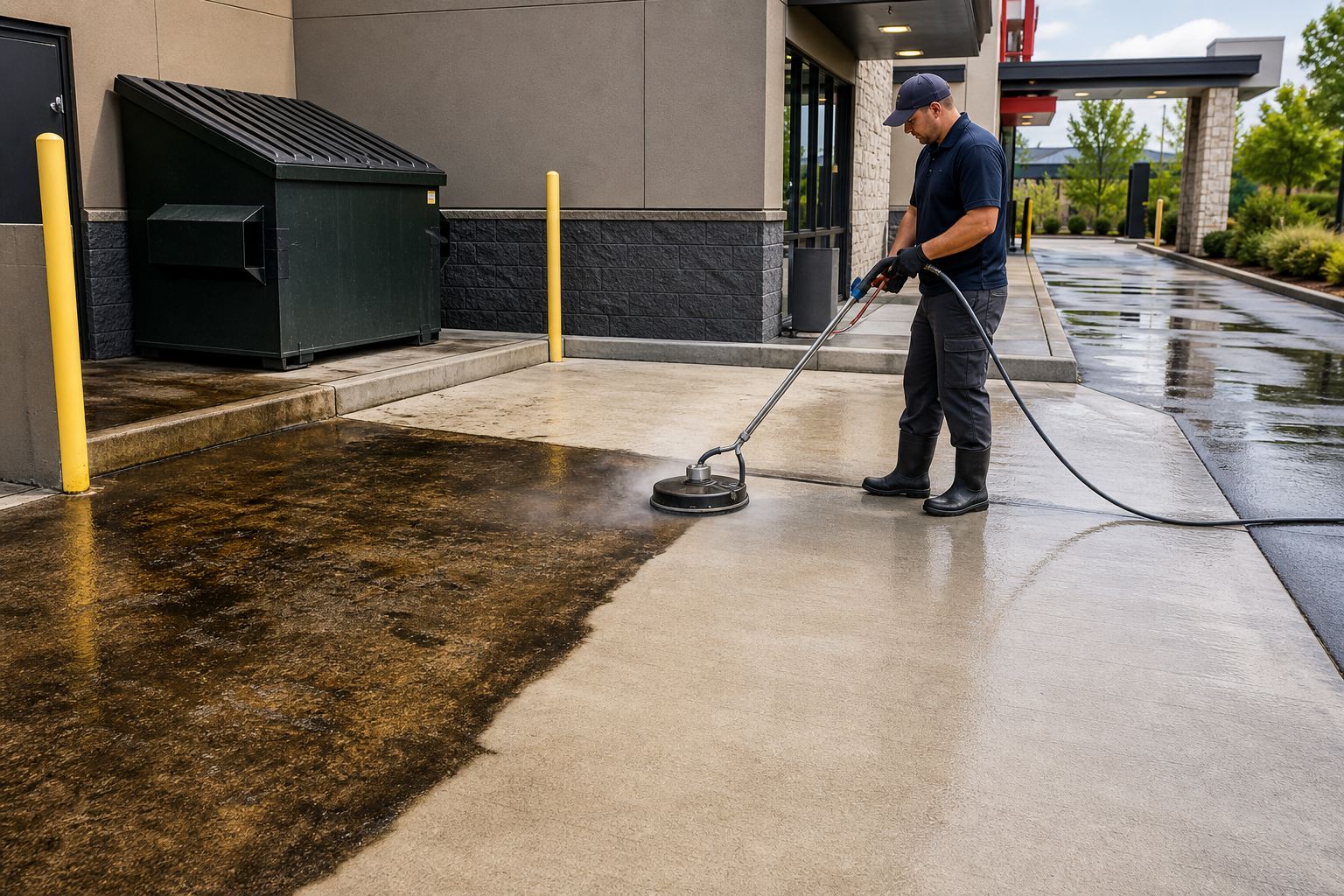
Grease stains on commercial concrete are more than a cosmetic issue. They can make an entrance look neglected, create slip concerns, and leave a poor first impression on customers, tenants, and inspectors. The right grease stain removal approach depends on the surface, the age of the stain, and how deeply the contamination has soaked in.
Grease Stain Removal: Identify the Surface, Stain Age, and Contamination Level
Effective grease stain cleaning starts with a quick diagnosis. Concrete grease stain treatment is different from cleaning brick, pavers, or coated surfaces because each material absorbs and releases oil differently. Fresh spills usually respond faster than old, set-in stains, while porous materials may need more dwell time and repeat cleaning.
- Concrete: often responds well to pretreatment, hot water, and agitation.
- Brick and pavers: need surface-specific stain treatment to avoid discoloration or joint damage.
- Coated surfaces: require lower pressure and gentler chemistry.
For commercial properties, the best result usually comes from matching the method to the surface instead of using one approach everywhere. If a grease spot is only a few days old, a targeted pretreat-and-rinse process may be enough. If it has baked in for months, the expectation should be improvement, not magic.
Commercial Degreasing Service for Restaurants, Drive-Thrus, and Food Service Cleanup
Restaurants need a commercial degreasing service that keeps customer-facing areas clean and safe. Grease often builds up around entrances, patios, sidewalks, drive-thrus, and service zones where foot traffic and spills happen every day. Restaurant grease cleanup is especially important for businesses that depend on a clean first impression.
Common service areas include:
- Restaurant exteriors and entryways
- Drive-thru lanes and order windows
- Sidewalks, patios, and seating areas
- Dumpster enclosures and grease-prone loading areas
Recurring restaurant exterior cleaning helps reduce buildup before it becomes difficult to remove. For many food service businesses, scheduled cleanings are the easiest way to stay ahead of grease and protect curb appeal. In practice, that can mean a monthly exterior wash for busy locations or a seasonal refresh for smaller operations.
Dumpster Pad Grease Removal and High-Traffic Concrete Cleaning
Dumpster pad grease removal is one of the most common maintenance needs for commercial sites. These areas collect runoff, spills, and residue from trash handling, food waste, and heavy use. Over time, the buildup can spread into nearby concrete, parking lot edges, and service lanes.
A reliable dumpster pad cleaning plan often includes:
- Pretreatment with an industrial degreaser
- Hot water pressure washing on durable concrete
- Runoff-aware rinsing and cleanup
- Ongoing maintenance for repeat buildup
Parking lot cleaning and parking garage cleaning can also benefit from the same high-traffic concrete degreasing process, especially where vehicles drip oil or delivery traffic leaves marks behind. A loading dock that looks fine from a distance can still hide a slick, grimy edge that keeps getting worse if no one addresses it.
Surface-Safe Stain Treatment for Concrete, Brick, Pavers, and Coated Surfaces
Surface-safe cleaning matters as much as stain removal. Pressure washing works well on durable concrete, but delicate materials may need soft washing or lower pressure to prevent damage. The goal is to remove contamination without harming the surface.
A professional process usually includes:
- Inspection of the stain and material
- Pretreatment and dwell time
- Application of the right industrial degreaser
- Hot water washing when appropriate
- Adjustments for brick, pavers, or coated finishes
For older stains, the result may be significant lightening rather than total removal. That is normal with oil stain removal on porous surfaces, especially when the stain has been there for a long time.
Expected Results, Runoff Control, and Recurring Grease Prevention
Fresh oil and grease spot cleaning can often produce fast improvement, while older stains may need repeat treatment or maintenance visits. In many cases, the goal is to remove as much visible residue as possible and reduce the stain so the surface looks cleaner and more professional.
Runoff control is also part of a safe commercial degreasing service. Grease, detergent, and rinse water should be managed carefully to protect surrounding areas and keep the site clean during service.
For restaurants, dumpster pads, and other grease-prone properties, recurring service is often the smartest option. Monthly, quarterly, or seasonal maintenance can keep buildup under control and reduce the need for more aggressive treatment later.
If your property needs grease stain removal or ongoing concrete grease stain treatment, a professional commercial exterior cleaning team can recommend the right plan based on the surface, the stain, and how often the area gets contaminated. It is usually better to prevent a thick stain from forming than to try to fight a year’s worth of buildup later.
Frequently Asked Questions
How do you remove grease stains from concrete?
Use the right pretreatment, apply a commercial degreaser, and rinse with the proper method based on stain age and surface condition. Older stains may need repeat treatment and may only lighten rather than disappear completely.
What is the best commercial degreasing service for restaurants?
A recurring commercial degreasing service that covers entrances, sidewalks, drive-thrus, dumpster pads, and other high-traffic areas is usually the best fit for restaurants.
Can pressure washing remove oil stains from a driveway or parking lot?
Yes, pressure washing can help remove or lighten oil stains, especially when paired with pretreatment and hot water. Very old stains may require multiple passes.
How do you clean a dumpster pad with heavy grease buildup?
The best approach is pretreatment, industrial degreaser, hot water pressure washing, and runoff-aware cleanup so the area is cleaned safely and thoroughly.
What is the difference between pressure washing and soft washing for grease removal?
Pressure washing is used for durable surfaces like concrete, while soft washing uses lower pressure for more delicate surfaces. The right method depends on the material and contamination level.
How often should a restaurant or commercial property schedule grease cleanup?
Restaurants, dumpster pads, and high-traffic commercial sites often benefit from monthly, quarterly, or seasonal maintenance depending on use and spill volume.
Can you remove old or set-in oil stains from concrete?
Often yes, but older stains are harder to fully remove. The usual expectation is significant improvement, with complete removal depending on depth, age, and porousness.
Do you offer recurring commercial degreasing and maintenance cleaning?
Yes. Recurring service is the best way to keep grease-prone areas cleaner and reduce heavy buildup between visits.