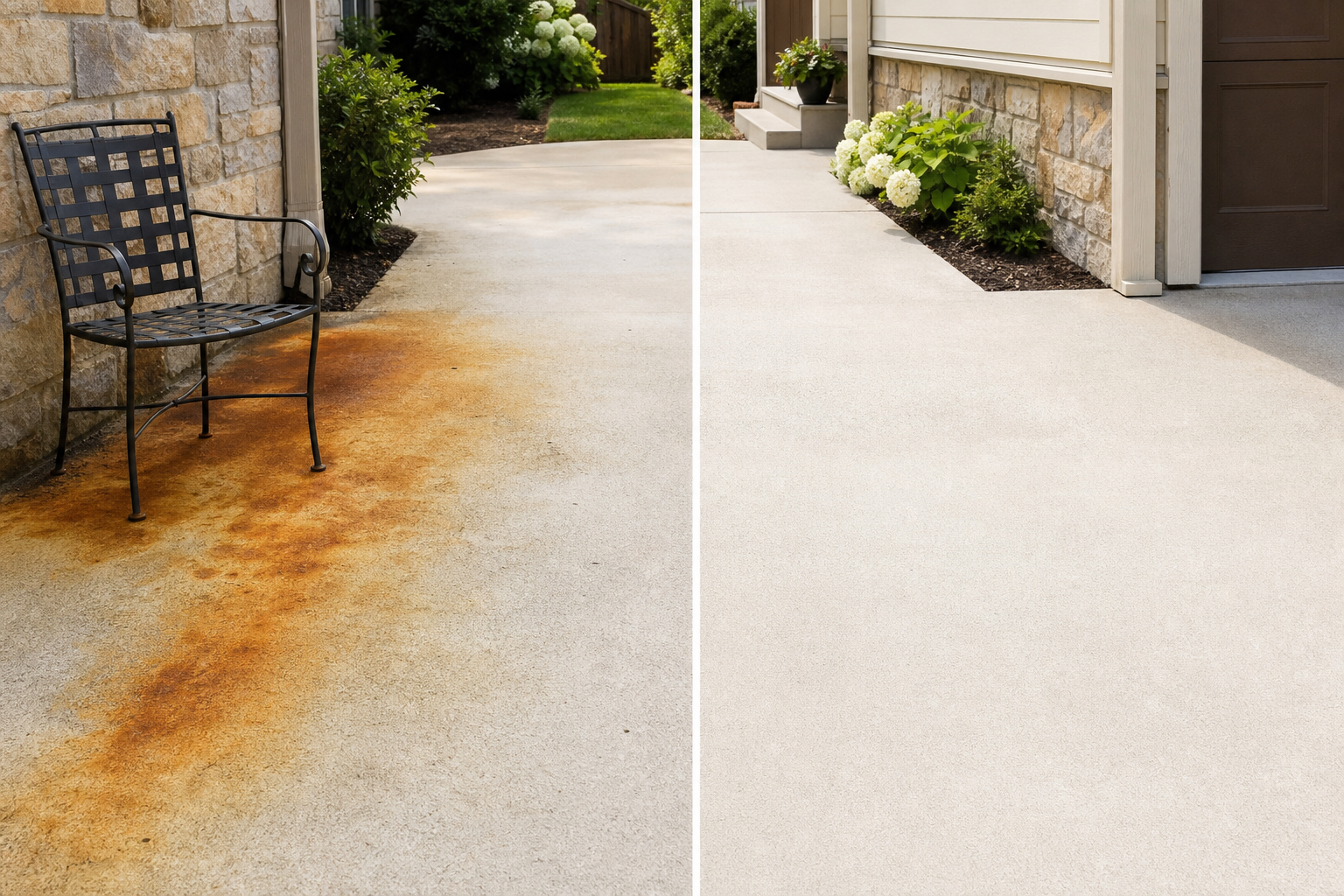
Rust stain removal is one of those jobs where the right diagnosis matters more than brute force. A brown-orange mark on concrete may be rust, but it could also be hard water, mineral buildup, or iron deposits from irrigation, fertilizer, or metal furniture. Before you start any rust spot treatment, identify the surface and test a hidden area. That is the safest way to protect driveways, patios, masonry, painted trim, and delicate finishes.
For homeowners and property managers in Salt Lake City and Park City, the best approach is usually simple: match the cleaning method to the stain source, then use the least aggressive product that can still do the job.
Rust stain removal: quick diagnosis by stain type and surface
Use this quick decision tree before you clean:
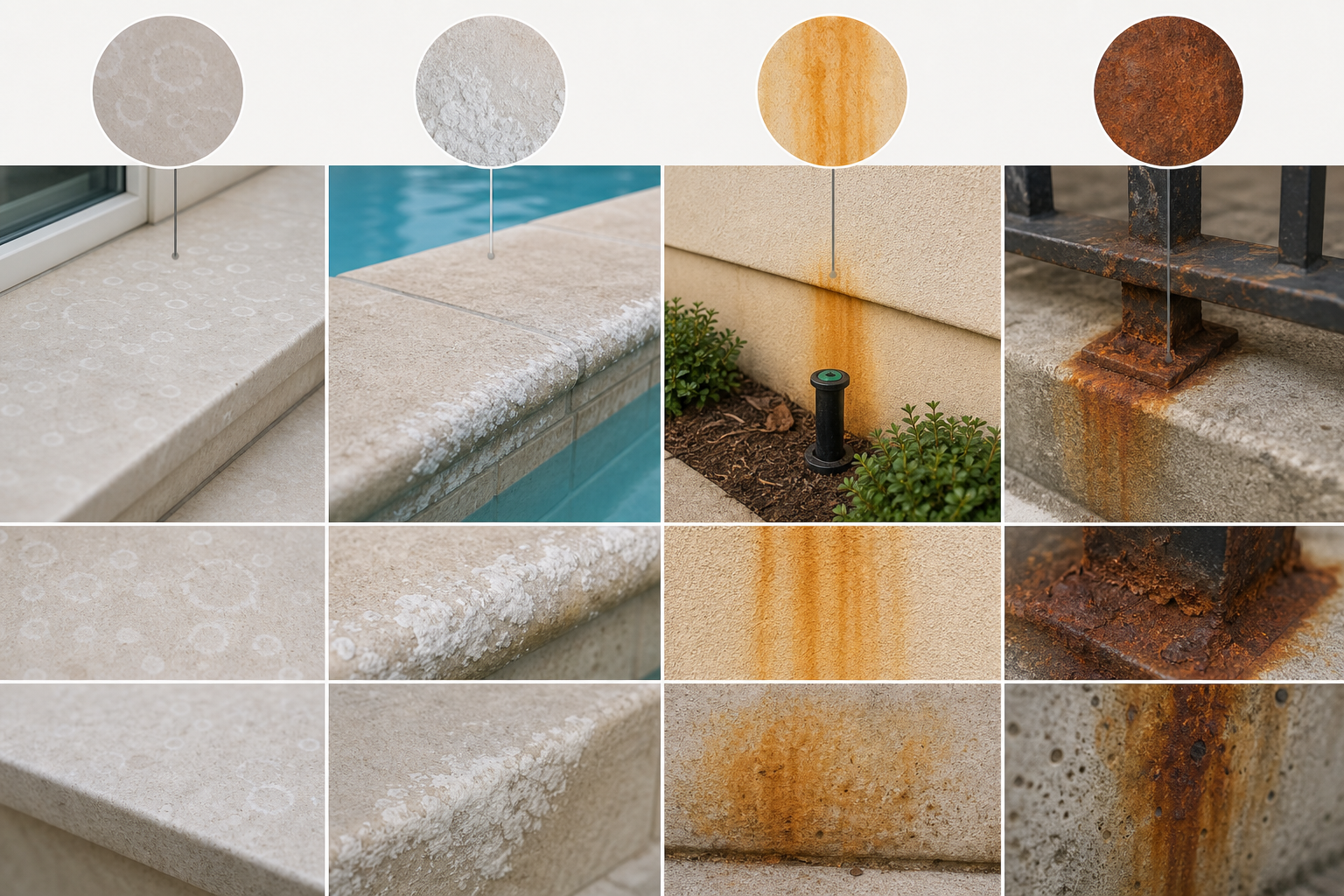
- Rust: often orange, red-brown, or dark brown, and may come from metal furniture, irrigation parts, rebar bleed, tools, or fasteners.
- Hard water / mineral stains: usually chalky, cloudy, or ring-shaped, especially around sprinklers and outdoor fixtures.
- Oxidation: common on metal and coated surfaces; it can look dull, faded, or powdery before true rust appears.
- Delicate or painted surfaces: require test patches and gentler products to avoid etching or discoloration.
For rust stain removal, the safest method depends on the surface. Concrete and masonry can often handle specialized cleaners, while painted surfaces, coatings, and decorative materials need more caution. If you are unsure, a professional assessment can save time and prevent damage.
Concrete rust removal for driveways, sidewalks, patios, pavers, and masonry
Concrete rust removal is common on driveways, sidewalks, patios, pavers, curbs, retaining walls, and masonry surfaces. These materials are durable, but they can still etch or lighten if the wrong chemical is used. In most cases, rust removal from concrete works best with a product made for masonry rust stain removal rather than with pressure washing alone.
Here is the practical order of operations:
- Dry brush loose dirt and debris first.
- Pre-wet nearby plants and surrounding areas.
- Apply a concrete-safe rust remover to a small test spot.
- Allow the product to dwell only as directed.
- Rinse thoroughly and repeat only if needed.
Driveway rust stains from sprinkler overspray or metal patio furniture often respond well to targeted treatment. Pressure washing can help remove surface grime, but it usually will not remove embedded staining by itself. On pavers and masonry, too much pressure can worsen joint loss or create uneven color, so controlled cleaning is usually the better choice.
Hard water rust stain cleanup: how to tell rust from mineral and iron deposits
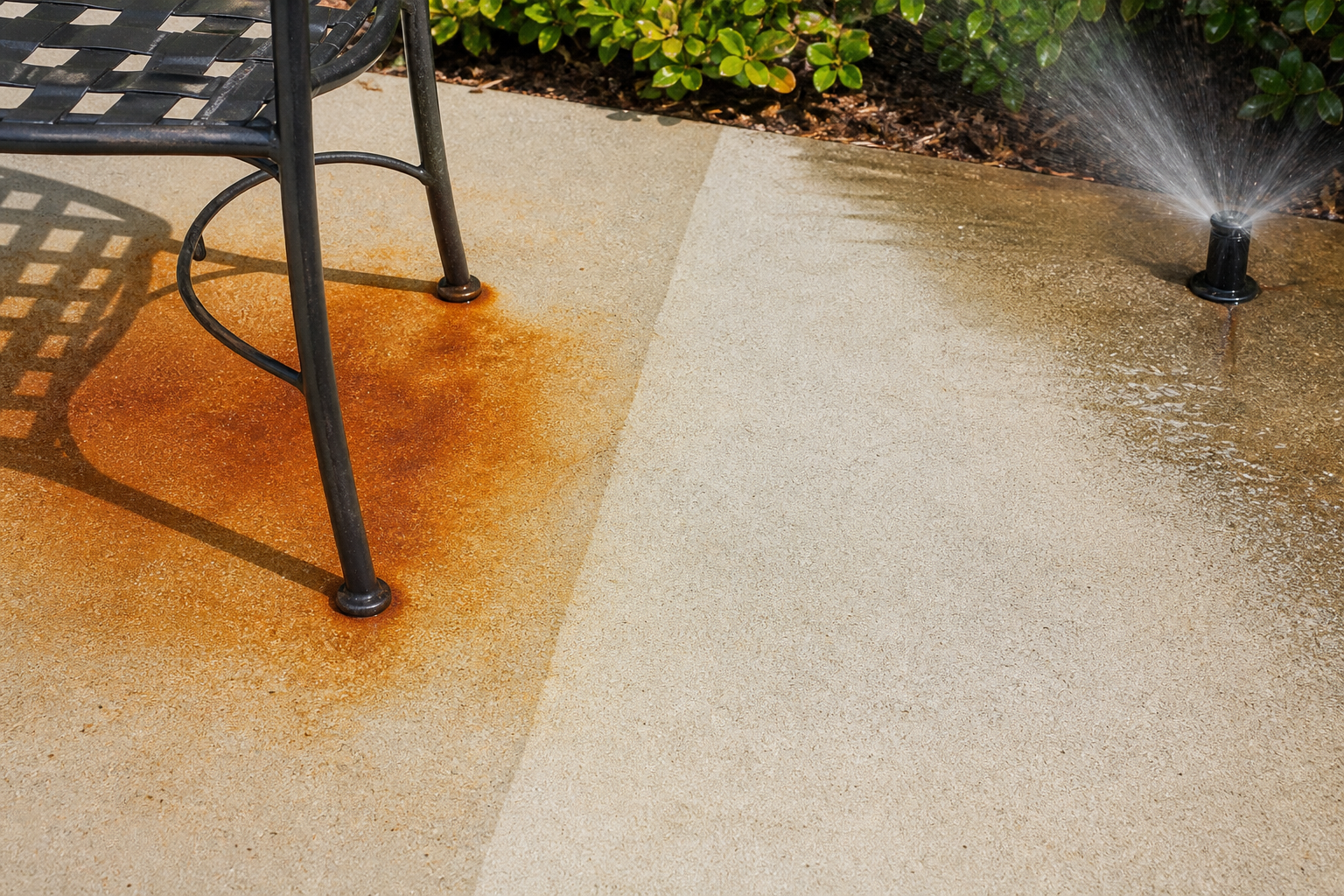
Hard water rust stain cleanup starts with knowing what you are actually seeing. Many orange stains are not pure rust at all. They may be mineral deposits, iron deposits, or a mix of residue from irrigation water and metal contact. Using the wrong cleaner can waste time or make the stain harder to remove.
Look for these clues:
- Hard water stains often appear cloudy, white, or pale with an orange tint.
- Iron deposits may leave orange streaks, especially below sprinkler heads or hose bibs.
- True rust often has a deeper reddish-brown color and a clear source such as a metal object.
- Mineral buildup may feel rough or crusty rather than oily or powdery.
If the stain is from irrigation or runoff, water stain removal may require a product designed for mineral and iron staining, not a standard degreaser. That is why orange stain removal can vary so much from one property to the next. The right diagnosis helps avoid damaging concrete, stone, or coatings.
Surface oxidation removal and corrosion stain removal on metal and coated surfaces
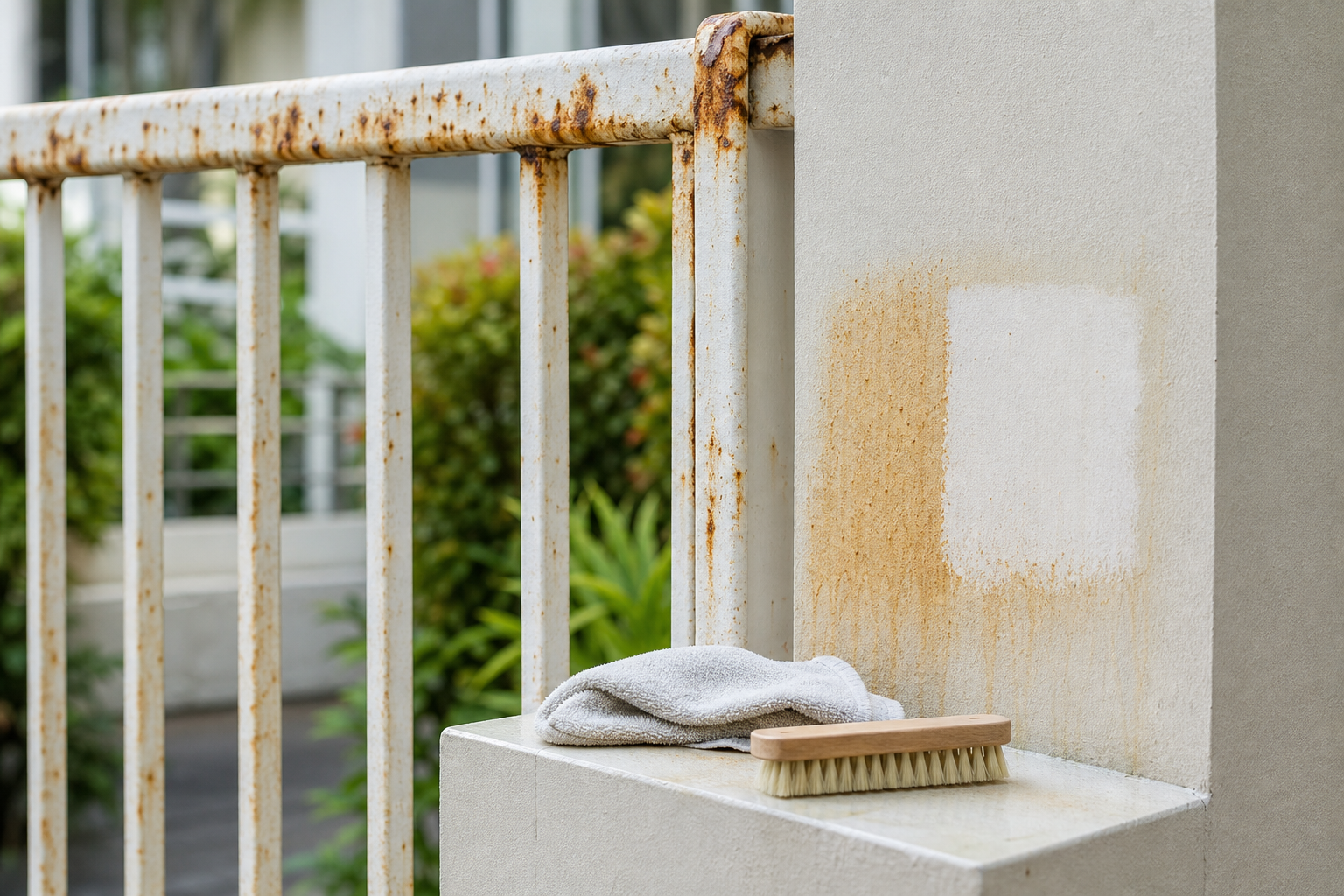
Surface oxidation removal is important for metal railings, fences, outdoor furniture, equipment housings, and some coated surfaces. Oxidation stains can look like dull discoloration at first, then progress into rust oxidation or corrosion if moisture and air continue to break down the finish. For painted or coated materials, start with the least aggressive option.
Best practices include:
- Test a small hidden area first.
- Use a cleaner that is safe for the specific finish.
- Avoid harsh abrasives on painted, powder-coated, or decorative surfaces.
- Rinse thoroughly to remove residue that may cause future spotting.
On metal surfaces, corrosion stain removal may be possible without heavy scrubbing if the oxidation is still early. On adjacent materials like siding, stone, or trim, gentle cleaning is often safer than aggressive treatment. If the finish is already failing, restoration may require a pro to prevent spreading the problem.
Metal stain removal service for stainless steel, fences, and equipment rust cleaning
For stainless steel stain removal, fence rust removal, and equipment rust cleaning, a professional metal stain removal service can be the smartest option. Commercial and residential properties often have multiple stain sources at once: sprinkler overspray, metal hardware, corrosion, and runoff from adjacent materials. In those cases, DIY cleaning can take longer and still leave visible shadowing.
Professional help is especially useful when:
- The stain covers a large area or multiple surfaces.
- The surface is hard to access or elevated.
- Runoff must be controlled near landscaping, drains, or entryways.
- The material is sensitive, coated, or part of a customer-facing asset.
For commercial clients, rust stain removal service pricing usually depends on severity, access, square footage, and the type of substrate involved. Rolling Suds of Salt Lake – Park City can evaluate the stain, choose the safest method, and recommend the right cleaning plan for concrete, metal, fences, equipment, and other exterior surfaces.
When pressure washing helps, and when it makes rust stains worse
Pressure washing can help remove loose dirt and reveal the true stain pattern, but it is not a complete rust stain solution. On concrete and masonry, high pressure may spread discoloration, open pores, or create a lighter “cleaned” patch around the stain without removing it. On painted, coated, or delicate surfaces, pressure can cause even more damage.
- Use pressure washing for rinsing, surface prep, and removing loose debris.
- Use chemistry for embedded rust, mineral staining, and oxidation.
- Use caution on painted surfaces, soft stone, and decorative finishes.
The best results usually come from combining the right cleaner with controlled rinsing and a surface-specific technique. That is the safest path for rust spot treatment on both residential and commercial properties.
How to prevent rust stains from coming back
Rust stains can return if the source is still present. That is common with sprinkler systems, rusting furniture feet, metal planters, irrigation overspray, old fasteners, and equipment that sits on porous surfaces. Prevention is just as important as cleanup.
- Move metal items off porous surfaces when possible.
- Check sprinklers for overspray onto concrete, siding, and fences.
- Replace corroded hardware before it bleeds onto the surface.
- Rinse high-risk areas during routine maintenance.
For recurring issues, a scheduled exterior cleaning plan can help property owners and managers stay ahead of stains before they become permanent.
FAQ
What is the best way to remove rust stains from concrete?
Use a stain-specific method based on the source and severity, starting with a test patch and a cleaner designed for concrete rust rather than general pressure washing alone.
Can rust stains be removed without damaging the surface?
Yes, if you match the method to the material, use the lowest effective strength, and test a small hidden area first on delicate or painted surfaces.
Will pressure washing remove rust stains?
Pressure washing may remove loose dirt, but rust stains often need a chemical treatment; on some surfaces, pressure alone can also spread or deepen the stain.
What chemicals are used for rust stain removal?
Products vary by surface and stain source, but common options include rust removers formulated for masonry, metal-safe cleaners, and specialty products for mineral or iron staining.
Can rust stains come back after cleaning?
Yes, especially if the source of the staining is still present, so prevention and recurrence control matter after the initial cleanup.
How much does rust stain removal service cost?
Cost depends on stain severity, surface size, material, accessibility, and whether the job is a small spot treatment or a larger professional restoration project.
If you need help with rust stain removal, concrete rust removal, hard water rust stain cleanup, or metal stain removal service in Salt Lake City, Park City, or nearby Utah communities, Rolling Suds of Salt Lake – Park City can help evaluate the surface and recommend the safest next step.